



A Viral Interview and a National Conversation
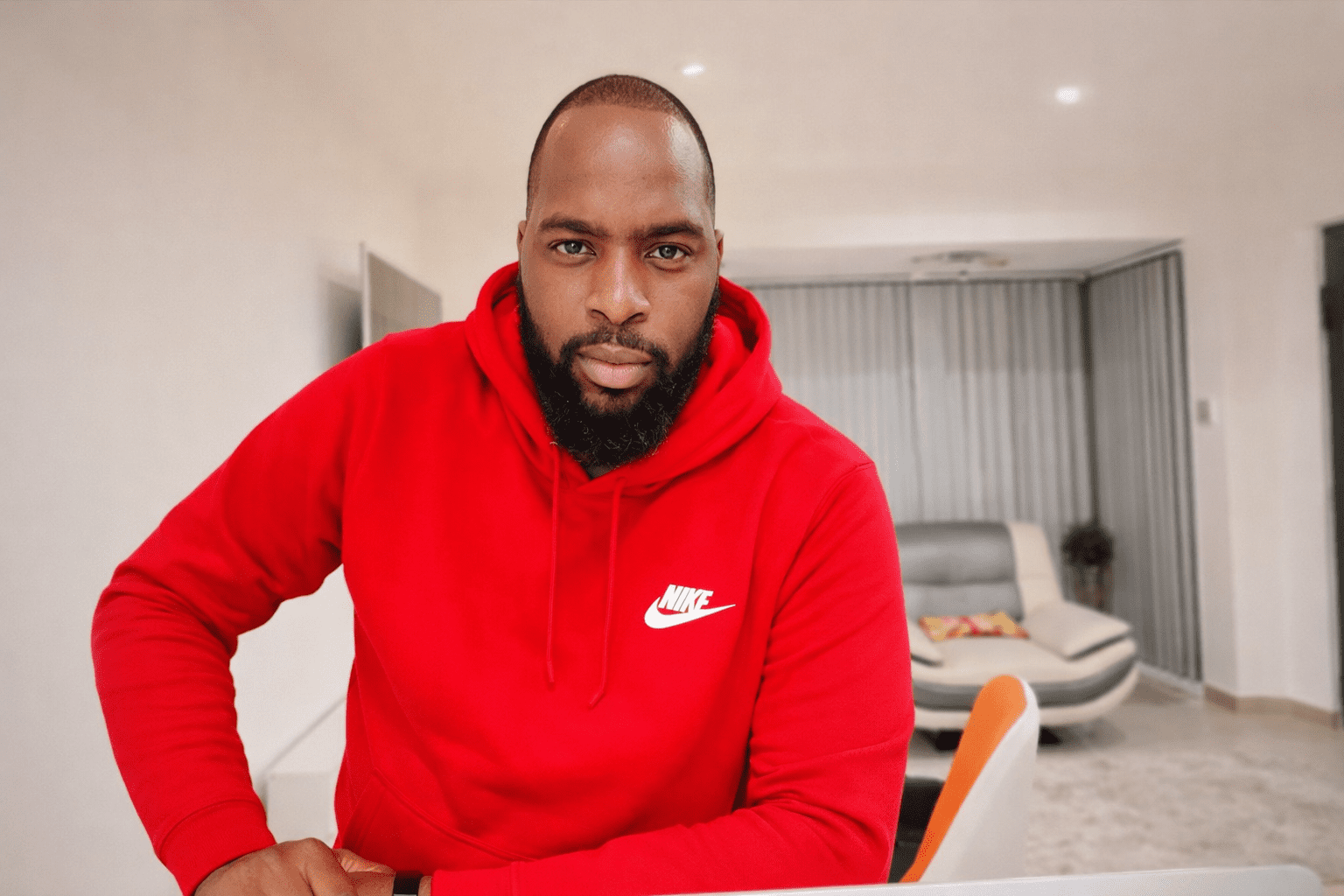
Few interviews have generated as much discussion in recent weeks as that of Nigerian real estate investor Morenikeji Giwa.
Clips from the interview spread rapidly across social media after Giwa suggested that his personal fortunes were not necessarily tied to Nigeria’s economic trajectory and implied that certain forms of economic instability could create opportunities for some businesses.
He also remarked that he does not pray for Nigeria, a statement that many viewers interpreted as evidence of detachment from the country’s broader fortunes.
The reaction was swift and deeply divided.
Some praised Giwa for expressing a reality that many successful businesspeople privately understand but rarely articulate in public. Others condemned his remarks as insensitive, arguing that they reflected a mindset disconnected from the daily struggles of ordinary Nigerians.
What began as a debate about one businessman quickly evolved into a wider discussion about wealth, privilege, governance and public trust.
More importantly, it raised questions that extend far beyond the interview itself.
Why do comments such as these resonate so strongly? Why do many citizens assume that wealthy individuals see the country differently from everyone else? And what does this reveal about the relationship between economic power and public confidence in institutions?
Why the Remarks Struck a Nerve
The public response to Giwa’s comments reflects more than disagreement with an individual viewpoint.
It points to a growing perception that economic realities are experienced differently across social groups.
For many Nigerians, inflation means rising food prices, increasing transport costs, higher school fees and reduced purchasing power. Economic downturns are felt directly through household budgets and living standards.
For wealthier individuals, economic shocks are often mitigated by assets, investments, foreign currency holdings and diversified sources of income. While they are not immune to economic instability, they frequently possess mechanisms that reduce their exposure to its most severe effects.
This divergence in lived experience helps explain why Giwa’s remarks generated such intense reactions.
Many citizens interpreted the comments through the lens of a broader concern, namely that those with wealth and influence operate under a different set of economic realities.
Whether that perception is entirely accurate is less important than the fact that it exists and continues to shape public attitudes.
Wealth, Incentives and Economic Behaviour
The controversy also raises a broader analytical question.
Do people with significant wealth view public policy differently from those without it?
Research in political economy and behavioural economics suggests that incentives play a powerful role in shaping attitudes and preferences.
Individuals often support policies that align with their economic interests, whether they are workers, entrepreneurs, investors, landlords or consumers.
A worker struggling with rising living costs may prioritise wage growth, social protection and price stability. A business owner may focus on regulatory certainty, access to capital and tax policy. Property investors may evaluate housing reforms differently from renters. Exporters and importers often hold contrasting views on exchange rate policy.
These differences do not necessarily arise from ideology or personal morality.
They are frequently shaped by economic position, exposure to risk and financial responsibility.
This distinction matters because it shifts the discussion away from questions of character and towards questions of incentives.
Rather than asking whether wealthy individuals are more or less patriotic than ordinary citizens, it may be more useful to ask how economic circumstances influence the way people interpret national challenges.
Nigeria’s Business Environment and the Politics of Stability
Nigeria provides a particularly revealing case study because of the close relationship between economic activity and government policy.
Many sectors depend heavily on decisions relating to foreign exchange allocation, taxation, land use, infrastructure development, regulatory approvals and public investment.
In such an environment, maintaining stable relationships with political authority often becomes a matter of business continuity rather than political preference.
This helps explain why many prominent business leaders are rarely openly confrontational towards government, regardless of which administration is in power.
Such caution should not automatically be interpreted as support for government policy. In many cases, it reflects a calculation about risk, predictability and long-term business interests.
The reality is that businesses tend to favour stability.
Investors generally seek environments where policy shifts are predictable, regulations are clear and market conditions are relatively certain.
This tendency is not unique to Nigeria. It is a common feature of economies around the world.
A Global Pattern
The intersection between economic power and public influence is visible across different political systems.
In the United Kingdom, debates surrounding immigration, public spending, and national identity frequently dominate political discourse, while questions about wealth concentration and corporate influence often receive less sustained attention.
In the United States, political discussion is commonly framed through cultural and partisan divisions, even as lobbying groups, major corporations and organised interests continue to exert considerable influence on policy debates.
South Africa presents another example. Despite major political transformation since the end of apartheid, economic inequality remains among the highest in the world. Debates about ownership, opportunity and economic inclusion continue to shape national conversations.
The details vary from country to country.
The underlying tension does not.
Across many societies, citizens continue to wrestle with questions about how economic influence interacts with political power and public accountability.
The Trust Gap
At its core, the reaction to Giwa’s interview reflects a question of trust.
Trust is one of the most important assets any society possesses. It influences confidence in government, support for institutions and perceptions of fairness.
Research by the OECD has found that perceptions of fairness, integrity and responsiveness are among the strongest drivers of public trust. Citizens are more likely to trust institutions when they believe rules are applied consistently, and decision-making processes operate in the public interest.
Conversely, trust tends to weaken when people believe that certain groups enjoy privileges, protections or opportunities unavailable to others.
This is why public perception matters.
Even when measurable outcomes improve, confidence can decline if citizens believe that access to opportunity remains unequal.
The debate surrounding Giwa’s comments reflects this broader concern.
For many observers, the interview was not simply about one wealthy individual. It became a symbol of a larger discussion about whether economic and political systems operate fairly.
Do People Change When They Become Wealthy?
One of the most overlooked aspects of the debate concerns the relationship between wealth and perspective.
Public discussions often assume that individuals would maintain identical views regardless of their economic circumstances.
Evidence suggests otherwise.
Economic position frequently influences priorities and preferences.
A renter and a landlord may assess housing policy differently. A salaried employee and a business owner may interpret taxation through different lenses. Investors and consumers often respond differently to inflation because they experience economic risks in different ways.
This does not necessarily mean that wealth changes a person’s values.
It may simply mean that wealth changes the incentives and responsibilities surrounding them.
Understanding this distinction is important because it moves the discussion beyond individuals and towards systems.
The issue is not whether one particular billionaire thinks differently from the average citizen.
The issue is whether institutions are capable of balancing the interests of groups whose incentives are not always aligned.
Institutions and Accountability
History suggests that societies function most effectively when institutions are strong enough to manage competing interests.
Independent courts, transparent procurement systems, effective tax administration, regulatory oversight, a free press and active civil society organisations all play important roles in preventing the excessive concentration of influence.
Strong institutions reduce dependence on individual personalities.
They help ensure that accountability does not depend on the goodwill of politicians, business leaders or public officials.
At the same time, institutions cannot operate effectively without civic participation.
Citizens who are informed, engaged and willing to scrutinise power remain an essential part of democratic governance.
The relationship between institutions and citizenship is therefore mutually reinforcing.
One cannot function effectively without the other.
Beyond One Interview
The controversy surrounding Morenikeji Giwa’s interview is ultimately about more than one businessman and more than one controversial statement.
It has become a lens through which broader concerns about inequality, influence, accountability and trust are being examined.
The central question is not whether wealthy people think differently from ordinary citizens. Economic research suggests that differing incentives make that almost inevitable.
The more important question is whether societies can build institutions strong enough to ensure that those differences do not undermine fairness, accountability or public confidence.
Long after the social media debate subsides, that question will remain.
And it may prove far more important than the interview that first brought it into public view.