PART 1 OF 5: The Negotiations That Ended Apartheid
By Ola Aina
Did Mandela secure political power at the expense of economic transformation?
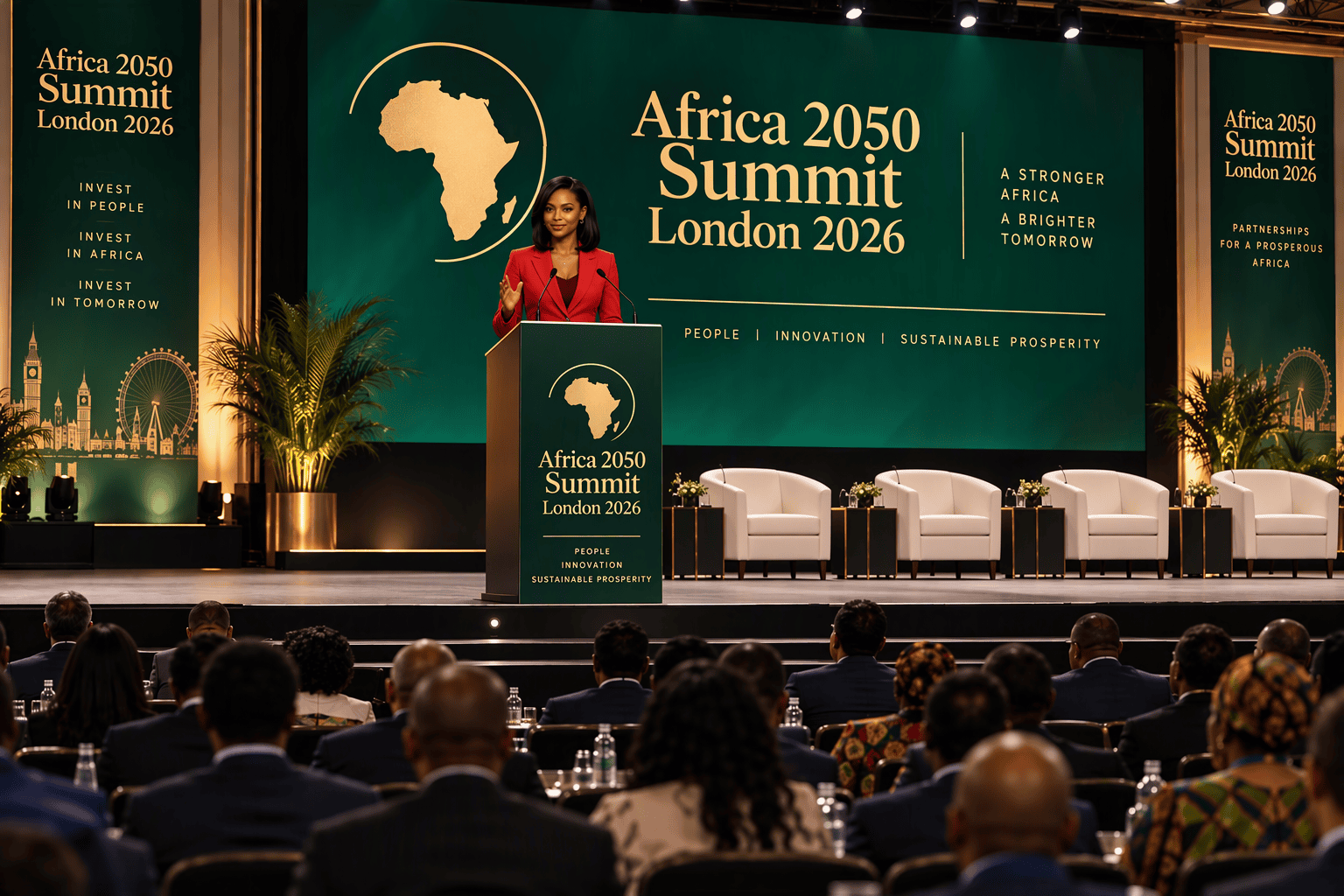
LONDON, 2026. A t the Africa 2050 Summit, a South African journalist challenged Nelson Mandela’s legacy.
“Mandela failed South Africa. He could have changed everything.”
The accusation was direct. Mandela had helped lead the struggle against apartheid, spent 27 years in prison and become South Africa’s first democratically elected black president. The journalist argued that the transfer of political power had not delivered the economic transformation that liberation was expected to bring.
I asked him a straightforward question.
“How did Mandela fail South Africa?”
“He could have changed everything,” he replied.
He argued that Mandela secured political leadership but failed to secure economic control. The government changed hands, but ownership of land, mines, banks and major businesses did not undergo a comparable transformation. In the journalist’s view, Mandela compromised when he should have pushed further.
It is a serious charge. To assess it, we must examine what Mandela was negotiating, what the settlement secured, what concessions were made and what remained within the authority of the government that took office in 1994.
The central issue is whether the political settlement that ended apartheid also restricted the economic transformation many South Africans expected from freedom.
In Long Walk to Freedom, Mandela reflected on climbing a great hill only to discover that there were more hills to climb. He described freedom as an unfinished journey, with continuing responsibilities beyond the achievement of political liberation.
That reflection offers a starting point for this series. Winning political leadership was a historic achievement. Securing economic power presented another challenge.
To understand why, we must return to the negotiating table.
The struggle to control the state
On 2 February 1990, President F. W. de Klerk announced the unbanning of the African National Congress (ANC) and other political organisations. Mandela was released from prison on 11 February. These developments opened the way for negotiations, although apartheid remained in place during the transition.
South Africa was deeply divided. Political violence continued, distrust ran high and the parties faced difficult questions about how power would be transferred. The ANC sought democratic government based on universal political participation. The National Party government had to negotiate the end of the political system it had administered.
The Convention for a Democratic South Africa, known as CODESA, began its formal plenary process in December 1991. Disagreements over constitutional arrangements and the transition contributed to the breakdown of that process in 1992. Negotiations resumed through a multiparty forum in 1993, leading to an interim Constitution and the arrangements for democratic elections.
The first democratic election took place in April 1994. The ANC won, and Mandela became president.
For the black majority, this represented a fundamental change. The right to elect a government replaced a political system built on racial exclusion. Political leadership was no longer reserved for the white minority.
The economy, however, had its own structures of ownership and influence. Land, industrial capital, financial institutions and major businesses did not change ownership simply because a new government took office. The political transition determined who would govern the country, but it did not automatically transfer the assets through which economic power was exercised.
This was the next challenge facing democratic South Africa.
Was economic power negotiated away?
The journalist’s accusation takes us to the heart of the negotiations.
Did the settlement protect too much of the economic power accumulated under apartheid? Were the negotiations designed primarily to transfer political authority while preserving existing patterns of ownership? Or did the agreement establish a democratic framework within which the new government retained room to pursue substantial economic restructuring?
These questions require evidence from the negotiating record.
One of the clearest examples of the struggle over economic power emerged during negotiations over property rights.
The ANC was concerned that constitutional protection for property could obstruct land restitution and redistribution. The National Party sought strong safeguards for existing property owners. The property clause in the 1993 interim Constitution reflected a compromise between these competing positions.
The final Constitution, adopted in 1996, retained property protections while recognising land reform and restitution as legitimate objectives.
This history shows that economic ownership was part of the constitutional debate. The parties had to confront the question of how a democratic state would address property acquired and accumulated under a system of racial discrimination.
The compromise does not, by itself, prove that Mandela surrendered the possibility of economic transformation. To establish its consequences, we must examine the protections the settlement created, the powers it left available to the democratic government and the way those powers were subsequently used.
A negotiated settlement can restrict certain options while leaving others open. It can also reflect decisions taken under political pressure, with consequences that become clearer over time. The task is to establish which constraints arose from the settlement and which outcomes followed from later government decisions.
The journalist believes Mandela should have secured more. The historical record must help us establish what more was possible, what obstacles stood in the way and what costs alternative choices might have carried.
What did freedom promise economically?
The ANC’s Reconstruction and Development Programme, published in 1994, recognised that democratic government had to confront the poverty and inequality inherited from apartheid. It addressed basic needs and economic reconstruction, reflecting the movement’s stated ambition to improve the material conditions of people excluded from opportunity under the old system.
Economic transformation was therefore part of the liberation agenda. The incoming government recognised that political rights alone could not resolve the disadvantages created by decades of racial discrimination.
The challenge was how to turn that ambition into policy. Land ownership, industrial capital, access to finance and control of major businesses presented complex questions involving law, investment, public spending and the role of the state.
The constitutional settlement shaped the environment in which those decisions would be made, but it did not determine every economic policy that followed.
We must therefore establish whether the limited transfer of economic ownership resulted primarily from the terms of the settlement, the constraints facing the incoming government or the choices made by Mandela and his administration. Each explanation requires separate examination.
It would be too easy to describe every compromise as a betrayal. It would be equally simplistic to use the dangers of the transition to defend every decision made afterwards.
The investigation must establish what happened, why it happened and which alternatives were available.
The settlement and the unfinished struggle
In 1994, South Africa achieved a historic transfer of political leadership. The apartheid government gave way to a democratic administration chosen by the electorate. The ownership of the economy did not undergo an equivalent transformation at the moment of political change.
This is the starting point for the debate raised at the Africa 2050 Summit.
The question is whether the settlement that made democratic government possible also left economic power concentrated in ways that would make the promises of liberation harder to fulfil.
To answer it, we must identify what was agreed during the negotiations, what was contested, what remained unresolved and what authority the new government retained to pursue economic change.
Only then can we assess the decisions Mandela made as president.
The journalist’s accusation was that Mandela could have changed everything. This first instalment does not presume to settle that claim. It establishes the historical question that the rest of the series will investigate.
Mandela and the ANC won leadership of the state. Who continued to control South Africa’s economic assets, and why did political liberation not produce an equivalent transfer of economic power?
That is where Part 2 begins.

Ola Aina is a Black British journalist based in London, specialising in African affairs. She reports on politics, social change, and culture across the continent, bringing depth and context to underreported stories. Through insightful, human-centred journalism, her work connects UK audiences with Africa’s complexities, challenges, and opportunities