
By early 2024, Peter had begun noticing something strange.
The more he listened to conversations about migration in Britain, the less he recognised himself in them.
The headlines were everywhere.
Migration numbers.
Border controls.
Pressure on public services.
Housing shortages.
Political promises.
Television debates.
Social media arguments.
Immigration had become one of the country’s most discussed subjects.
Peter often felt invisible within the conversation.
When he arrived in Britain in 2021, migration had felt personal.
A family decision.
A response to insecurity.
An investment in opportunity.
Now he was beginning to understand that migration meant different things to different people.
For migrants, it was often about survival, opportunity, education, or family.
For employers, it was increasingly linked to labour shortages.
For universities, it represented a major source of income.
For governments, it became a number to manage.
For politicians, it had become one of the most powerful issues in public life.
Peter was part of a much larger movement.
Between 2021 and 2024, tens of thousands of Nigerians arrived in the United Kingdom through study, work and family routes. The migration wave included doctors, nurses, bankers, engineers, academics, technology professionals and entrepreneurs.
For some, it represented opportunity.
For Nigeria, it also represented a significant transfer of talent, skills and human capital.
One evening, after another shift, Peter sat with Tunde discussing the latest immigration debate dominating the news.
The conversation was familiar.
“Britain is broken.”
“Migrants are taking our jobs.”
“Public services are overwhelmed.”
“The country can no longer cope.”
Peter listened quietly.
Then he asked a question.
“If migrants are such a burden, why does the system keep bringing people in?”
Tunde leaned back.
“Because immigration and politics are rarely the same conversation,” he said.
Peter looked at him.
“The country needs workers.”
Tunde continued.
“It needs nurses, carers, doctors, warehouse staff, drivers, builders and taxpayers. Entire sectors would struggle without migrant labour.”
He paused.
“But immigration also wins votes.”
Peter remained silent.
“In every country, politicians need an issue people can rally around,” Tunde said. “Back home, you’ve seen how politicians use ethnicity, religion and insecurity. Here, immigration often plays a similar role.”
“The reality is more complicated than the headlines.”
“Most migrants come here to work. Many pay taxes from the moment they arrive. Most cannot access public funds. Many pay thousands in visa fees, healthcare surcharges and other charges before they even begin to settle.”
He took a sip of his drink.
“But when people are struggling with housing costs, NHS pressures or the cost of living, it is easier to point at migration than to explain years of policy failures, underinvestment or difficult economic decisions.”
Peter thought about that.
“The public frustration is real,” Tunde continued. “People are feeling pressure. But migrants often become the visible face of problems they did not create.”
For a moment, neither man spoke.
Then Tunde added quietly:
“Immigration is important to Britain’s economy. But politically, it often works best when people believe immigrants are the problem.”
The words stayed with Peter.
Because for the first time, he began to see migration as more than movement between countries.
It was also a political story.
Across Britain, different realities often existed side by side.
Many local people genuinely felt pressure.
Housing costs had risen.
NHS waiting lists remained a source of public concern.
The cost of living crisis continued to affect households across the country.
For many communities, those concerns were real.
Peter understood that.
Back in Nigeria, politicians often mobilised public emotions around ethnicity, religion and insecurity.
In Britain, immigration increasingly occupied a similar space within public debate.
Different countries.
Similar political instincts.
Complex problems often found simple villains.
Peter looked at his own situation.
Since arriving in Britain, he had paid visa fees.
Immigration Health Surcharges.
Council tax.
Rent.
Insurance.
Utility bills.
Vehicle costs.
Income tax.
National Insurance.
Despite contributing through taxes and fees, he could not access most public benefits.
Like many temporary migrants, he was subject to a condition known as No Recourse to Public Funds.
The phrase appeared repeatedly on immigration documents.
No Recourse to Public Funds.
The more Peter examined the system, the more complicated the picture appeared.
Britain clearly needed migrants in some sectors.
The care sector was one example.
Construction was another.
Logistics.
Warehousing.
Hospitality.
Parts of the NHS.
Many industries had become increasingly dependent on migrant labour to fill workforce shortages.
Universities had also changed.
Peter thought about everything they had spent since leaving Lagos.
Tuition fees.
Visa fees.
Flights.
Rent.
Car expenses.
Bills.
Professional courses.
Graduate Route applications.
By his rough calculation, the family had already spent well over £70,000 since arriving in Britain.
The figure forced him to pause.
He had never imagined spending that much money simply for the opportunity to start again.
Sometimes it felt as though migration itself had become an industry.
An ecosystem.
A chain of organisations, institutions and services connected by movement.
Universities.
Landlords.
Recruitment agencies.
Training providers.
Immigration advisers.
Employers.
Government departments.
Everyone played a role.
Everyone benefited differently.
The question was not whether migration generated value.
It clearly did.
The question was who benefited most from that value.
Increasingly, Peter suspected that migration created winners far beyond the migrants themselves.
The further he looked, the more complicated the picture became.
While Peter wrestled with his own immigration uncertainty, another development was unfolding across Britain.
Immigration was becoming one of the dominant issues in British politics.
The language was becoming sharper.
The divisions more visible.
The tension was no longer confined to political speeches and newspaper headlines.
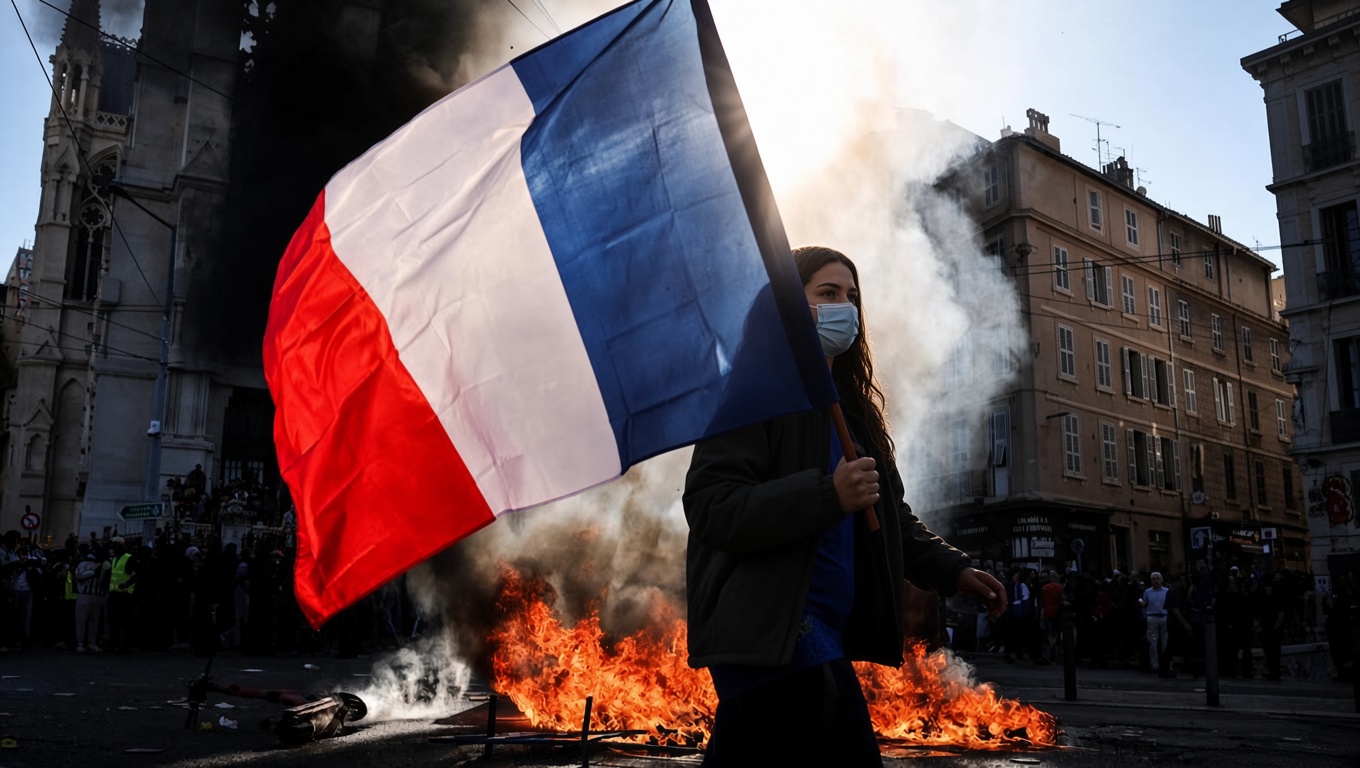
Across several towns and cities, anti-immigration protests escalated into disorder.
What began as demonstrations in some areas quickly evolved into scenes that unsettled many migrant communities.
Hotels housing asylum seekers were targeted.
Businesses were attacked.
Police forces were deployed as disturbances spread across parts of the country.
Images of unrest dominated television screens and social media feeds.
Peter watched the footage with disbelief.
Until then, migration had existed largely as paperwork.
Visa applications.
Sponsorship rules.
Immigration fees.
Now it appeared on television screens as burning buildings, angry crowds and people shouting slogans about immigrants.
One evening, while driving home after a security shift, Peter found himself unusually alert.
The roads were quiet.
Nothing happened.
For the first time since arriving in Britain, he felt something he had not expected.
Vulnerability.
Not because anyone had threatened him directly.
But because he realised that in the eyes of some people, he had become part of a national argument he never intended to join.
The irony was difficult to ignore.
He worked.
He paid taxes.
He paid visa fees.
He contributed to the economy.
Yet much of the public debate reduced migrants to a problem that needed solving.
The contradiction stayed with him.
A few days later, he received a call from Mr Abbey.
The older man asked how things were going.
Peter hesitated.
Then laughed quietly.
“Complicated.”
Mr Abbey understood immediately.
“It usually is,” he replied.
There was no judgement in his voice.
Only experience.
“The mistake many people make is thinking migration is one decision.”
Peter listened.
“It isn’t,” Mr Abbey continued.
“It’s a series of decisions. Every few years, the system asks another question. And every few years, you pay again.”
The words stayed with Peter long after the call ended.
Because they felt true.
He thought back to Nigeria.
The robbery.
The fear.
The decision to leave.
The confidence that hard work would solve most problems.
Now he understood something he had not understood in 2021.
Migration was not a destination.
It was a process.
And like every major process, an entire ecosystem had grown around it.
Some parts were visible.
Others operated quietly in the background.
A few days later, a message arrived.
A sponsorship opportunity.
The company held a valid licence.
The paperwork appeared genuine.
The route seemed possible.
There was only one problem.
The price.
Fourteen thousand pounds.
Peter stared at the screen.
Then at the balance in his account.
Then back at the screen.
Fourteen thousand pounds.
More than some people earned in a year.
More than many families could save in several years.
For the first time, he found himself asking a question he never imagined asking when he left Lagos.
Had legal status become something people could buy, if they could afford the price?
THE TRAP continues.