
A Different Way of Looking at Migration
The idea for this article came to me while watching football with a group of friends. As we discussed the matches, the players and the teams competing on the world stage, one observation kept returning to my mind. It is increasingly difficult to find a major national team that has not been shaped in some way by migration.
Look across international football, and the evidence is everywhere. Some of the biggest stars represent countries different from those of their parents or grandparents. Others are children of migrants who settled abroad in search of better opportunities and built new lives for their families. Their stories are not unusual. They have become a defining feature of modern sport.
That conversation led us to a simple but revealing question: What would football look like if voluntary migration never happened?
Would the same teams be competing for the biggest trophies? Would the same players be wearing the same national colours? Would some countries be stronger and others weaker? And beyond football, what would the wider world look like if millions of people had never crossed borders in search of education, employment, business opportunities or a better future?
The Debate We Keep Returning To
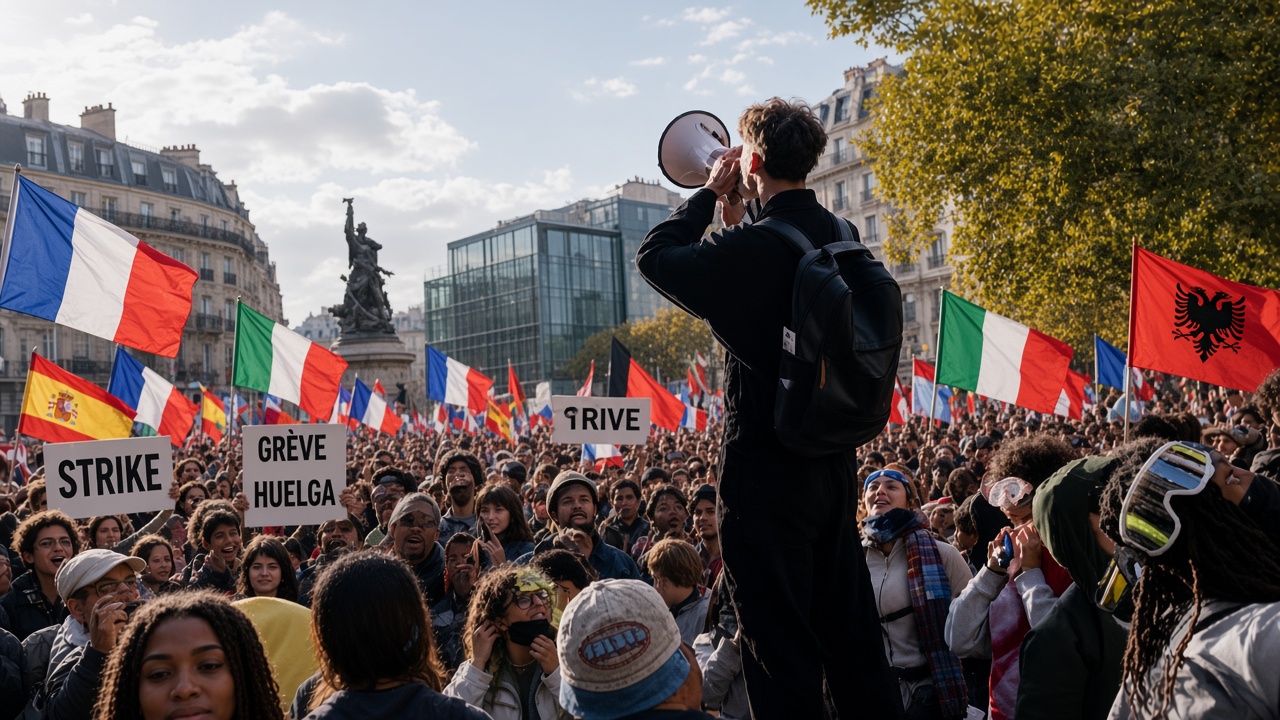
Migration has become one of the most divisive political issues of our time. Across Europe, North America and many other parts of the world, debates about immigration dominate election campaigns, influence public policy and shape national conversations about identity, culture and belonging.
Too often, however, migration is discussed only in terms of numbers, border controls and political consequences. Lost in these debates is a much larger question. What would the world look like if voluntary migration never happened?
Long before modern borders existed, people moved in search of trade, opportunity, knowledge and prosperity. In doing so, they helped shape the civilisations, economies and cultures we know today.
Football as a Mirror of the Modern World
The more I thought about it, the clearer it became that this question extends far beyond football. The sport simply provides a visible reminder of something much larger. Migration has shaped not only football, but also economies, businesses, universities, hospitals and entire societies.
Consider France’s 2018 World Cup-winning squad. Several of its players came from families with roots in Africa and the Caribbean. Their success reflected not only individual talent but also the complex reality of migration, opportunity and national identity in the modern world.
Many of the world’s leading national teams include players whose parents or grandparents migrated in search of opportunity. In some cases, the players themselves are migrants who moved at a young age and developed their careers in a different country. France, England, Belgium, Spain, Germany, the Netherlands and the United States have all benefited from the contributions of players from migrant backgrounds. In many cases, these athletes have become central to their countries’ sporting identities and successes.
Their presence is not evidence of identities disappearing. It is evidence of talent, opportunity and ambition crossing borders in an increasingly connected world.
Football also reveals an important truth. Talent is universal, but opportunity is not.
Many elite athletes have benefited from access to better coaching, facilities, education systems and professional structures in the countries where they were raised. Their success is often the result of a combination of personal talent and the opportunities made available to them. Without migration, many of these players might never have reached the highest levels of the game. Equally, the countries they represent might not have achieved the same success on the international stage.
Beyond the Pitch
The same principle extends far beyond sport.
Migration has helped shape modern economies by connecting talent with opportunity. Hospitals depend on migrant doctors and nurses. Universities attract students and researchers from around the world. Businesses recruit skilled professionals across borders. Technology companies thrive because they bring together people with different experiences, ideas and expertise. Some of the world’s most successful companies, research institutions and universities have flourished precisely because they attract talent from across national borders.
Migration does not simply move people.
It moves knowledge, innovation, skills, ambition and creativity.
Throughout history, societies that have attracted talent from different parts of the world have often become centres of economic growth, scientific discovery and cultural influence. From Silicon Valley to London, from Toronto to Dubai, the movement of people has contributed significantly to modern prosperity.
The Real Concerns
This does not mean migration is without challenges. Concerns about housing, infrastructure, public services, integration and social cohesion are legitimate and deserve serious discussion. Ignoring these concerns serves no one.
However, it is equally important to acknowledge what migration has contributed to the modern world.
Many of the doctors saving lives, entrepreneurs creating jobs, researchers developing new technologies and athletes inspiring millions are products of migration or the descendants of those who chose to move in pursuit of opportunity.
The Question We Should Be Asking
The debate, therefore, should not be reduced to whether migration is good or bad. Such a question is too simplistic for an issue that has shaped human history for centuries.
A more meaningful question is this: Can the modern world be fully understood without recognising the role migration has played in creating it?
From football stadiums and research laboratories to hospitals, universities and global businesses, the evidence is all around us.
The story of modern progress is, in many ways, the story of people who chose to move, adapt, contribute and build beyond the places where they were born.
As politicians continue to debate migration, perhaps we should pause and consider a different possibility. What if the modern world’s success has been built not only by nations and institutions, but also by millions of people who chose to leave one place in search of opportunity in another? If migration never happened, would the world be more prosperous, more innovative and more successful, or would humanity have lost some of its greatest talents by keeping people confined to the places where they were born?
The answer may tell us as much about our future as it does about our past, because the story of migration is ultimately the story of how people, talent and opportunity continue to shape the world we share.