An ordinary school run became a reflection on identity, heritage and what it truly means to belong in a changing Britain.
An Ordinary Walk, an Unusual Question
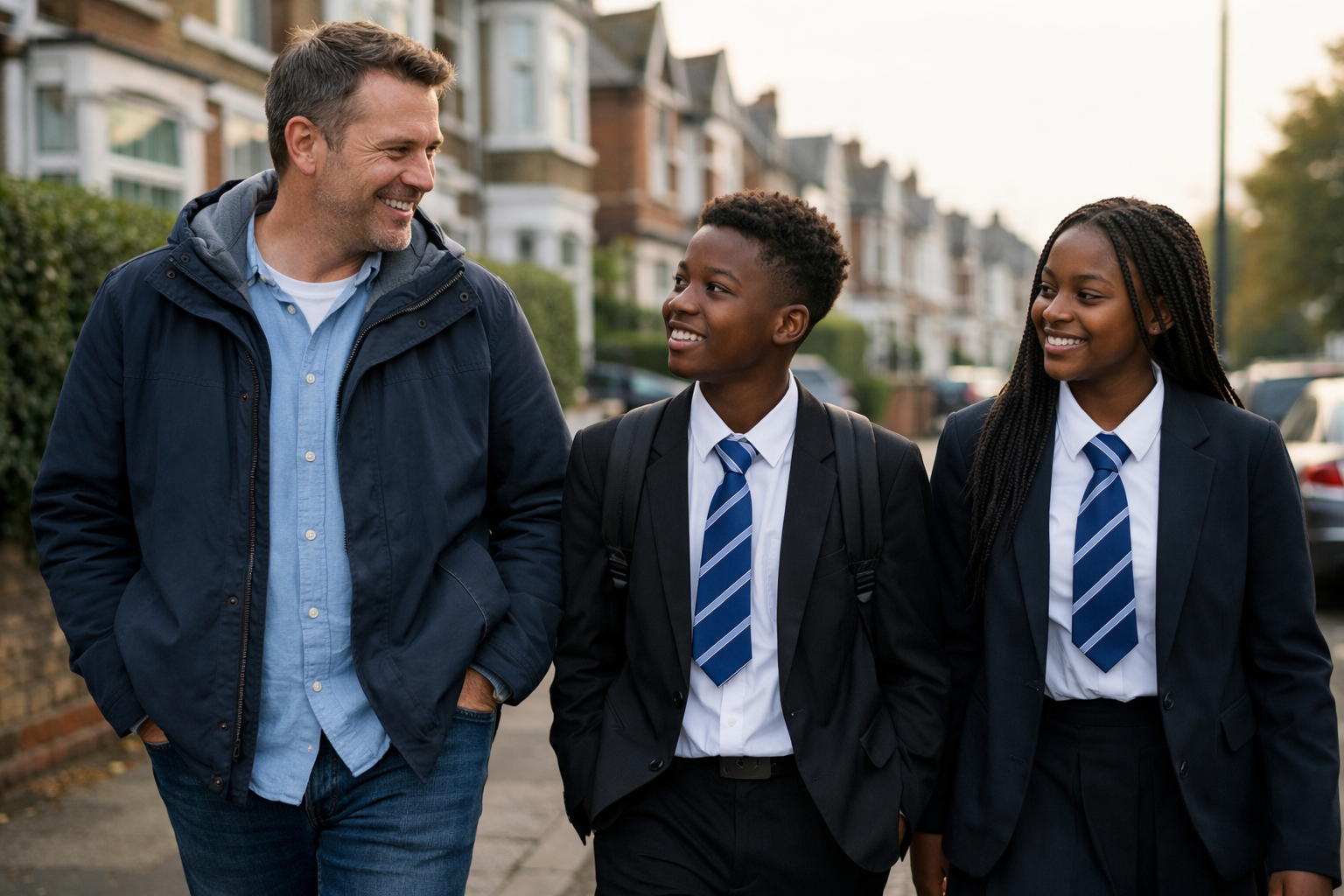
Some of the most meaningful conversations begin in the most ordinary places. Mine started on a quiet afternoon as my neighbour joined me to pick up my children from school. He greeted them warmly, laughed with them about their day and walked beside us as we headed home. Halfway through the walk, however, he became unusually quiet.
“You seem deep in thought,” I said.
He smiled before replying, “Can I ask you something I’ve been thinking about?”
“Go on.”
“It’s about children of African parents growing up here. They speak like every other British child. They go to British schools, understand British culture and, in many cases, have never even been to Nigeria or Ghana. Yet when they grow up, many still describe themselves as Nigerian or Ghanaian rather than British. I’ve always wondered why.”
There was no judgement in his voice, only genuine curiosity. His question carried far more weight than he probably intended because it touched on one of the most important questions facing multicultural Britain today. What does it really mean to belong?
More Than a Passport
I told him there was no simple answer because identity is rarely simple.
Citizenship is a legal status, but belonging is a lived experience. It is shaped by acceptance, recognition and the confidence that you are seen as part of the society in which you live.
Modern Britain has been transformed over many decades through migration and settlement. From the Windrush generation to families arriving from Africa, Asia and Europe, successive generations have contributed to Britain’s public institutions, economy, culture and national life. The 2021 Census reflects a country that is more ethnically diverse than at any point in its history. For millions of people, Britain is not a temporary destination. It is the only home they have ever known.
Many proudly describe themselves as British while also embracing their Nigerian, Ghanaian, Somali, Kenyan or Jamaican heritage. These identities do not compete with one another. They exist alongside each other.
The late cultural theorist Stuart Hall argued that identity is never fixed. It evolves through history, memory and lived experience. A person can be British by nationality, Black by race, Nigerian through family heritage and Londoner by upbringing without any of those identities contradicting another.
The issue is therefore not whether multiple identities can coexist. The real question is whether society fully recognises that they can.
Where Belonging Becomes Complicated
I asked my neighbour to imagine growing up in a country where people repeatedly ask, “Where are you really from?”
For some people, the question is nothing more than friendly curiosity. For others, hearing it repeatedly throughout childhood and adulthood can leave the impression that their British identity is somehow incomplete or requires explanation.
Imagine replying, “I’m from London.”
Only to hear, “No, where are you originally from?”
Although often well intentioned, repeated experiences like this can quietly shape how someone understands their place in society.
Social psychologist Henri Tajfel argued that identity is influenced by group recognition and belonging. When people feel that one part of their identity is questioned, they often strengthen another. That helps explain why many second-generation Britons remain deeply connected to their parents’ heritage. It is rarely a rejection of Britain. Instead, it is an affirmation of family history, culture and personal identity.
Ultimately, identity is shaped not only by how people see themselves, but also by how they believe society sees them.
Football and the Nation’s Reflection
My neighbour then mentioned something he had recently seen online.
“A British man of Ghanaian heritage said he would support Ghana if they played England in the World Cup,” he said. “I couldn’t understand it because he was born here.”
I told him football often reveals what statistics and political debates cannot.
When England reached the final of Euro 2020, Bukayo Saka, Marcus Rashford and Jadon Sancho became symbols of national pride. Their performances united millions of supporters and demonstrated the diversity that now defines English football.
After England lost to Italy on penalties, however, those same players became targets of racist abuse across social media. Within hours, celebration had turned into hostility. Although political leaders, football authorities and the overwhelming majority of supporters condemned the abuse, the damage had already been done.
For many young Black Britons watching, the message was difficult to ignore. Their Britishness appeared to be celebrated during success but questioned during failure.
England reached another European Championship final in 2024 against Spain. Players such as Bukayo Saka, Jude Bellingham and Kobbie Mainoo once again carried the hopes of the nation. Millions celebrated them and rejected racism, reminding us that Britain is also home to people who genuinely believe diversity strengthens national identity.
Football, therefore, reflects modern Britain in all its complexity. It celebrates progress while also revealing the work that remains.
When Public Debate Enters Private Lives
Identity does not develop in isolation. It is influenced by the conversations taking place across society.
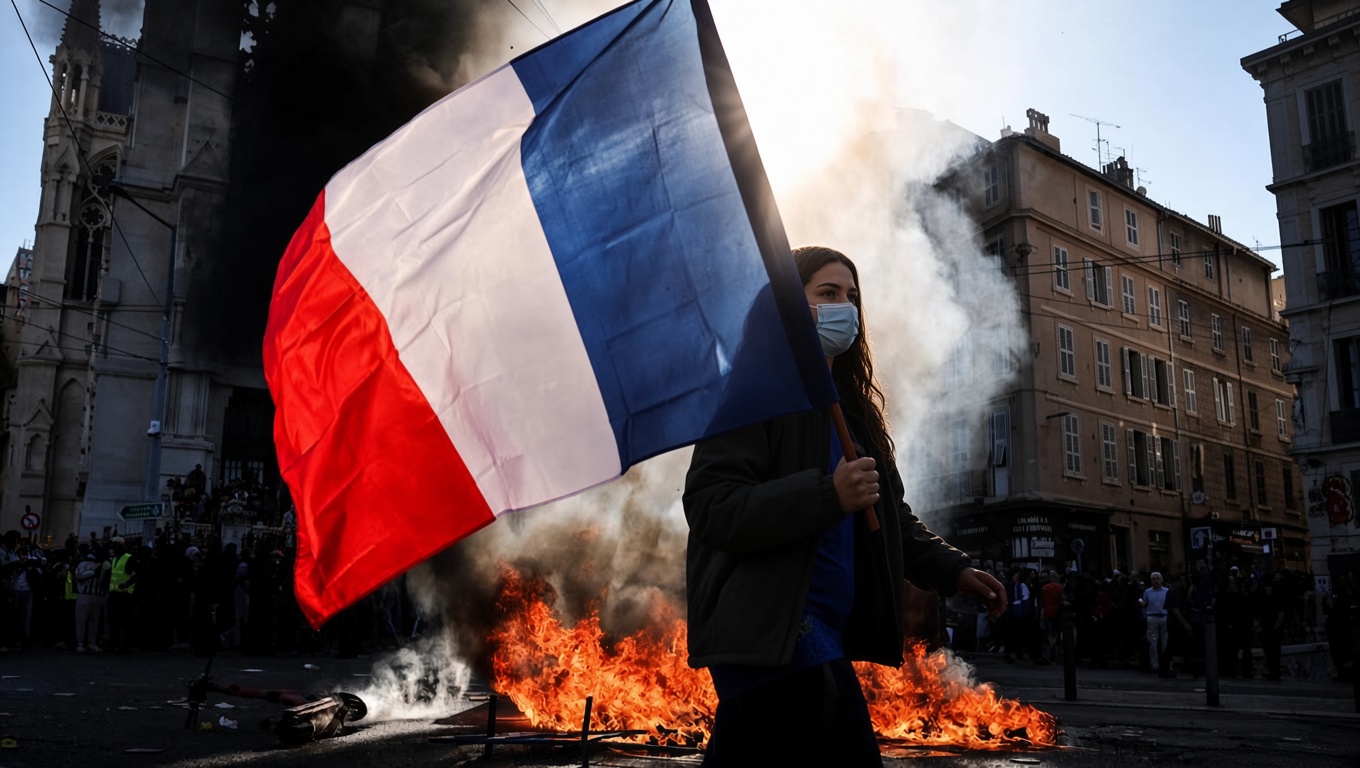
Immigration has become one of Britain’s most contested political issues. Debates surrounding asylum, border security and migration frequently dominate public discussion. Politicians, including Nigel Farage, have argued that immigration places pressure on public services and national cohesion. Others argue that such rhetoric can unintentionally blur the distinction between recent migrants and long-established minority communities whose families have lived in Britain for generations.
Similar tensions have emerged elsewhere. In Ireland, the riots that followed the November 2023 stabbing attack in Dublin were fuelled by false claims circulating online about the identity and immigration status of the suspect.
The violence quickly escalated into attacks on migrant communities, businesses and public transport, demonstrating how misinformation can inflame existing social tensions and turn fear into hostility.
Britain faced a similar challenge following the Southport killings in July 2024. In the immediate aftermath of the attack, false claims about the suspect spread rapidly across social media before the police had established the facts publicly.
Those rumours, which falsely portrayed the suspect as a Muslim asylum seeker who had recently arrived in the UK, were later identified by police, parliamentary inquiries and independent fact-checking organisations as a significant factor in fuelling protests and disorder in Southport and several other towns and cities.
These incidents illustrate how quickly misinformation can shape public perception, deepen social divisions and leave minority communities feeling vulnerable, even when they have no connection to the crimes that triggered the unrest.
Children may not fully understand these events, but they notice far more than adults often realise. They hear conversations, absorb headlines and observe how society speaks about people who look like them. Those experiences quietly influence how they understand both themselves and the country they call home.
Heritage Is Not the Opposite of Belonging
It is easy to overlook the role that families play in shaping identity.
Children of African heritage often grow up surrounded by stories, food, language, music, faith and traditions that connect them to places such as Lagos, Accra, Nairobi or Kingston long before they ever visit those countries.
This experience is not unique to African families. Irish, Polish, Italian and Caribbean communities have also preserved their cultural traditions across generations while remaining proudly British.
Heritage should never be mistaken for a rejection of Britain. It is simply one of the many ways people understand themselves and remain connected to their family history.
The Conversation Comes Full Circle
As we reached our homes, my children ran ahead laughing before disappearing through the front door.
My neighbour stood quietly for a moment before speaking again.
“I think I was asking the wrong question,” he admitted.
“I started by wondering why people still describe themselves as Nigerian or Ghanaian after growing up here. Perhaps the better question is whether we have created a society where they feel they belong without constantly having to explain themselves.”
He looked towards the children before continuing.
“Belonging is not something people can claim on their own. It is something society must also be willing to recognise. A country does not become weaker because people remember where they come from. It becomes stronger when people from different backgrounds feel equally respected, equally valued and equally at home.”
Closing Reflection
As I watched my children playing, I realised our conversation had never really been about Ghana or Nigeria.
It had always been about Britain.
More importantly, it had been about whether a modern, multicultural society can give people the confidence to embrace both their heritage and their citizenship without feeling they must choose between the two.
In the end, the strength of a nation is not measured by how completely people leave their past behind. It is measured by how confidently they can carry their history, culture and identity into a shared future, knowing that they belong without qualification.