
By Oliver Grant
The UK government’s call for households to prepare for emergencies has prompted different reactions among shoppers, with some buying additional household essentials while others remain unconcerned. For some, the announcement has brought back memories of the COVID-19 lockdown.
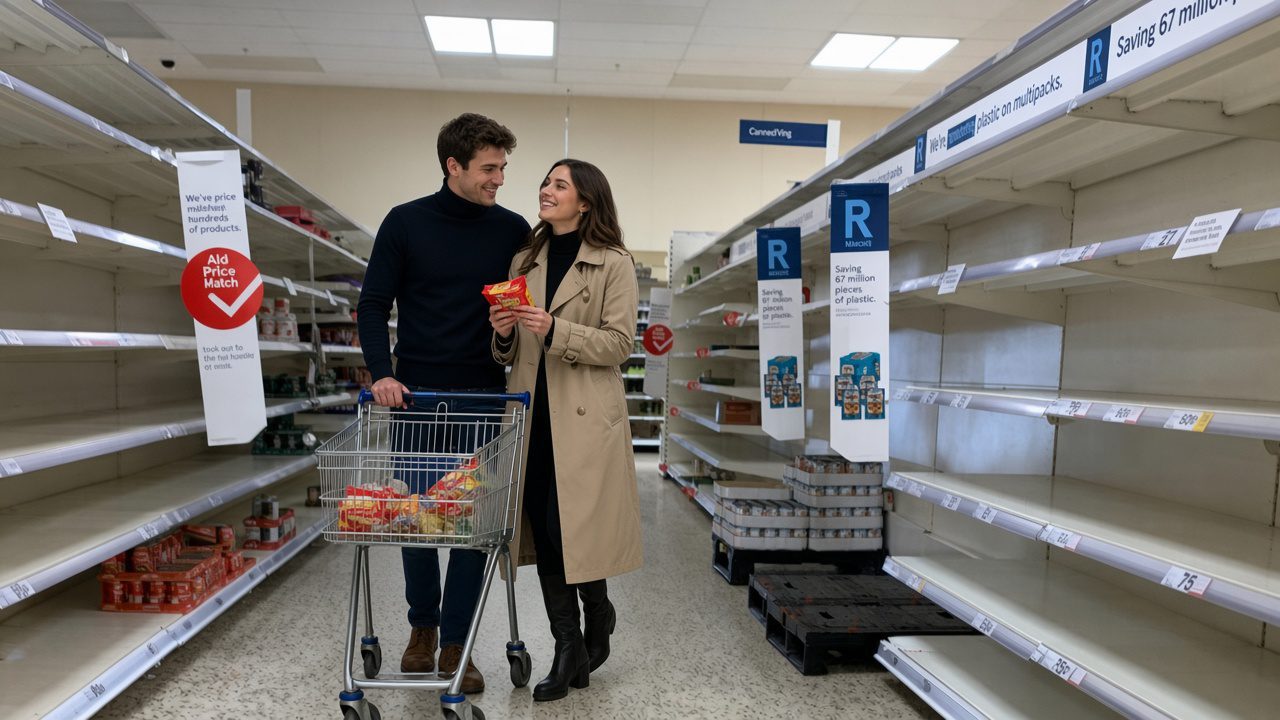
During visits to Aldi, Sainsbury’s, Asda, Tesco and Morrisons in Luton, London, Manchester and Birmingham, reporters observed shopping behaviour and spoke to customers about their reactions to the government’s advice.
Among the items reporters observed shoppers purchasing were canned food, groceries, toiletries, milk, bottled water and torches. Some shoppers were buying larger quantities of certain items as they sought to keep additional supplies at home.
The visits offered a glimpse of how people are responding to the announcement, from those who see household preparation as a sensible precaution to those who believe there is little immediate cause for concern.
‘It Feels Like Lockdown Again’
For some shoppers, the government’s advice has revived memories of the COVID-19 pandemic, when uncertainty about shortages and disruption prompted households to pay closer attention to the supplies they kept at home.
Some described the latest announcement as giving them “lockdown vibes”, recalling the anxiety and uncertainty associated with that period. For these shoppers, keeping essential items at home offers reassurance in case an emergency disrupts everyday life.
Others were less concerned, viewing the advice as a precaution rather than a warning that a major disruption was imminent.
The differing reactions highlight how people interpret official messages through their own experiences. While some respond by preparing their homes, others remain calm and see no reason to change their usual shopping habits.
What Is Behind The Government’s Campaign?
The government’s Be Ready campaign, announced on 22 October 2026, encourages households to take simple steps to prepare for emergencies that could temporarily interrupt essential services.
The guidance recommends keeping basic supplies at home to help households manage for three days if normal services are disrupted. Suggested items include drinking water, non-perishable food, a torch and spare batteries, a radio, a charged power bank, essential medication and important documents.
Potential disruptions include severe weather and incidents affecting electricity, water supplies, phone networks or internet access.
The campaign encourages people to think ahead and make practical preparations. It does not mean that a nationwide blackout or another major disruption is imminent.
Households are advised to check what they already have, identify what they may need and build up supplies gradually during their usual shopping trips.
Preparation Or Panic-buying?
Keeping extra essentials at home can help households manage temporary disruptions, particularly if access to food, water or other basic services is affected. However, buying excessive quantities out of fear can put pressure on household budgets and leave fewer products available for others.
The government recommends preparing gradually rather than buying everything at once. It also advises households to choose food and other supplies they would normally use, helping to limit unnecessary expense and waste.
For shoppers, the challenge is to distinguish sensible preparation from panic-buying.
The reactions seen in the supermarkets illustrate how official advice can influence everyday decisions. For some shoppers, memories of the COVID-19 pandemic remain a point of reference when considering possible emergencies. For others, the campaign is simply a reminder to be prepared without allowing concern to turn into fear.

Oliver Grant is a British journalist based in London, known for his calm insight, clear storytelling and thoughtful approach to social affairs, politics and culture. His work combines investigative depth with human-centred reporting, exploring the issues that shape communities and public life. Through digital and broadcast platforms, Oliver brings a balanced perspective to complex subjects, championing journalism that informs, challenges and encourages meaningful conversations.