




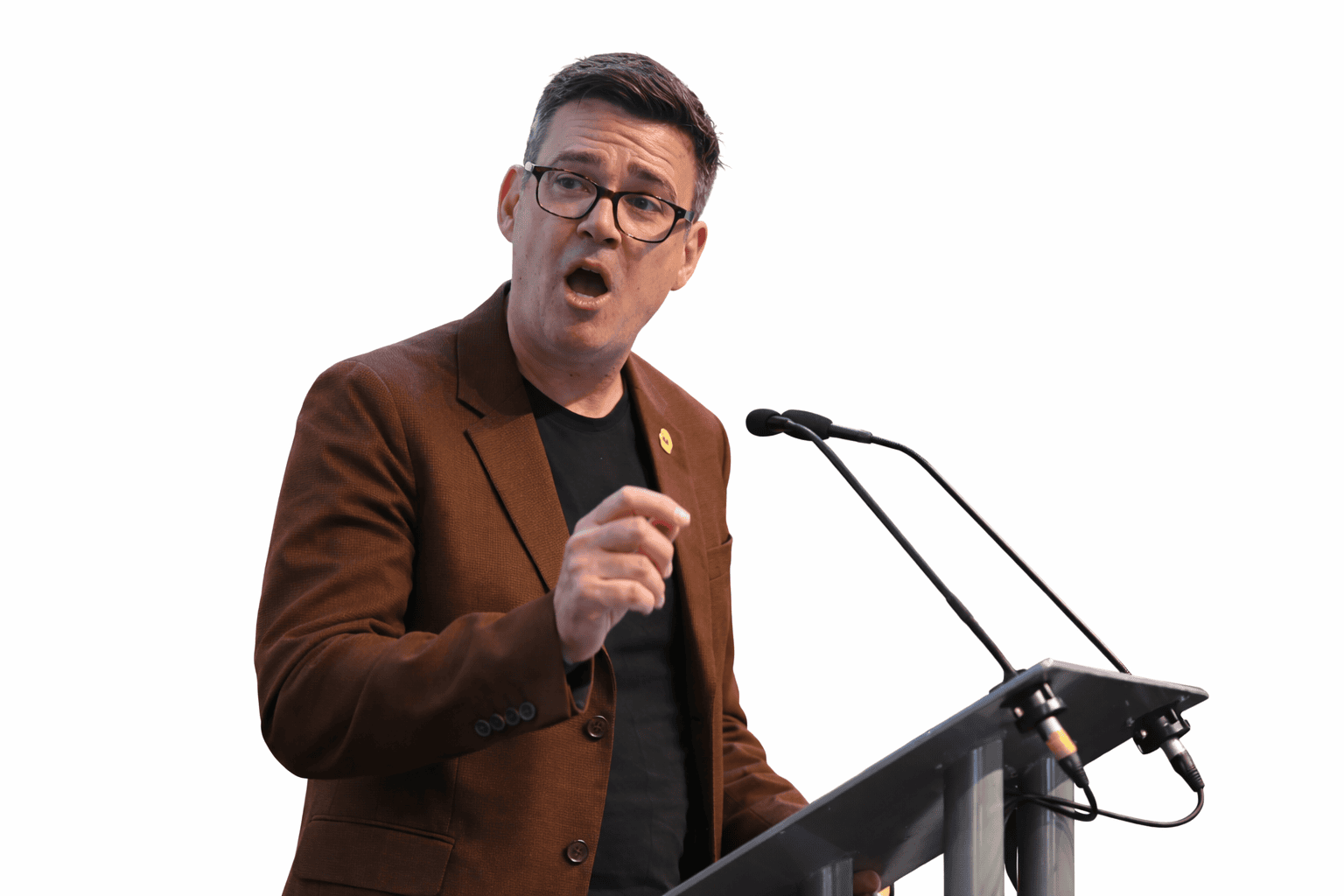
CAN ANDY BURNHAM BREAK BRITAIN’S CYCLE OF POLITICAL FATIGUE?
Britain’s prime ministers enter Downing Street with hope, but too often leave carrying the weight of expectations they cannot satisfy. Andy Burnham now faces the biggest test of all: whether a different style of leadership can succeed in the same unforgiving political environment.
By Oliver Grant
The Black Door of No.10
The black door of No.10 has always represented possibility. It opens with ceremony, optimism and promises of renewal. A new prime minister arrives carrying public expectations and a mandate for change.
Increasingly, that same door closes behind leaders weakened by crises, criticism and the reality of governing in an age where political judgement arrives faster than ever.
Andy Burnham’s arrival at Downing Street creates a new chapter in Britain’s long political story. His challenge is not simply to govern. It is to answer a deeper question: can any modern prime minister escape the cycle that has reshaped British politics over the past decade?
Three Decades of Hope and Disappointment
Since 1990, every occupant of No.10 has entered office promising a new beginning.
John Major offered stability after the turbulence of the Thatcher years. Tony Blair arrived in 1997 with a historic Labour victory and expectations of national transformation.
Gordon Brown inherited the responsibility of managing the global financial crisis. David Cameron promised modernisation and a new approach to government.
Theresa May offered certainty after the Brexit referendum. Boris Johnson won a large Conservative majority in 2019 with a promise to deliver Brexit.
Liz Truss promised economic change but lasted only 49 days after market confidence collapsed. Rishi Sunak inherited a government weakened by years of division and public frustration.
Keir Starmer entered Downing Street in 2024 after a decisive Labour victory and a pledge to restore stability.
Each leader began with political authority.
Each eventually discovered that winning power was easier than satisfying expectations.
The Age of the Crisis Prime Minister
The modern premiership has changed. The challenge is no longer only about creating policies or announcing reforms. It is about managing overlapping pressures while maintaining public confidence.
Economic shocks, global conflicts, public service pressures and constant media attention have transformed leadership into a daily test of resilience.
Major’s government was damaged by Black Wednesday in 1992, when Britain’s economic credibility suffered a major blow. Blair’s achievements in domestic reform were overshadowed by the Iraq War and declining trust.
Brown’s response to the global financial crisis earned international recognition but did not prevent electoral defeat. Cameron’s decision to hold the Brexit referendum ended his premiership. May became trapped by parliamentary deadlock during Brexit negotiations.
Johnson’s large electoral victory collapsed under scandal. Truss’s economic programme triggered market turmoil and ended her leadership within weeks. Sunak inherited a government facing deep public dissatisfaction.
The pattern is clear: political authority can disappear faster than it is created.
Britain’s Leadership Turnover
The figures reveal a dramatic change in Britain’s political environment.
The speed of this turnover is striking.
Cameron left office in 2016 after the Brexit referendum. May served from 2016 to 2019 before Brexit negotiations ended her premiership.
Johnson entered Downing Street in 2019 with a large Conservative majority but resigned in 2022 after a series of scandals.
Truss served only 49 days in 2022 after financial market turmoil damaged confidence in her government.
Sunak inherited a weakened Conservative administration and left office in 2024.
Starmer’s period in government ended in 2026 before Burnham entered Downing Street.
This level of leadership change reflects a period shaped by Brexit, economic disruption, public dissatisfaction and declining patience with governments.
The contrast with earlier eras is significant. Margaret Thatcher served eleven years, Tony Blair ten years and John Major seven Years. Those longer periods gave leaders more time to pursue political programmes before facing final judgement.
Today, prime ministers can lose authority within months rather than years.
Andy Burnham
Burnham arrives at No.10 with a political background unlike many recent prime ministers.
Unlike leaders who built their careers almost entirely within Westminster, his reputation was shaped through his years as Mayor of Greater Manchester, where he promoted regional decision-making, local investment and a closer relationship between government and communities.
That experience may become his greatest advantage. Many voters feel disconnected from Westminster and frustrated by national politics. A leader shaped by local government may offer a more practical approach to governing.
His route into Downing Street, however, creates a different political challenge. Without the political momentum that comes from winning a general election, he must quickly establish authority and convince both Parliament and the public that his leadership represents a credible new direction.
National government operates under pressures that local leadership rarely faces. Decisions are affected by global markets, international events, parliamentary pressures and competing national interests.
The Two-Year Test
His success will not be measured by speeches or intentions. It will be judged by whether people experience improvements in their daily lives.
The first two years will be critical.
Modern politics allows leaders little time to establish credibility. Social media, twenty-four-hour news and instant public reaction mean political damage can occur within days. Governments can lose public confidence long before they lose elections.
The Expectation Gap
Burnham’s greatest challenge may not come from opposition parties.
It may come from the growing gap between the improvements people reasonably expect from government and the time, resources and political space required to deliver lasting change.
The pressures facing Britain, from healthcare waiting times to housing shortages and economic weakness, were not created overnight. Many have developed over decades and require long-term solutions. Governments, however, are judged by the public within the limits of a single parliamentary term.
This creates one of the defining tensions of modern politics. Citizens expect governments to respond to immediate problems, while many of the biggest national challenges require patience, investment and sustained reform.
The lesson from recent history is not that Britain lacks capable leaders. It is that modern governments are operating in an environment where the demand for rapid results often exceeds the capacity of political institutions to deliver them.
Can Power Still Deliver?
Andy Burnham’s challenge is bigger than personal survival. He must demonstrate that a different style of leadership can produce meaningful results.
The black door of No.10 has opened many times with hope.
The question is whether Burnham can turn that hope into visible progress before public patience runs out.
Because in modern Britain, the greatest challenge is no longer simply winning power.
It is proving that power can still deliver.

Oliver Grant is a British journalist based in London, known for his calm insight, clear storytelling and thoughtful approach to social affairs, politics and culture. His work combines investigative depth with human-centred reporting, exploring the issues that shape communities and public life. Through digital and broadcast platforms, Oliver brings a balanced perspective to complex subjects, championing journalism that informs, challenges and encourages meaningful conversations.