

Beautiful Nubia, Dr Segun Akinlolu
Where Poetry, Music and African Memory Meet
Seun Oni
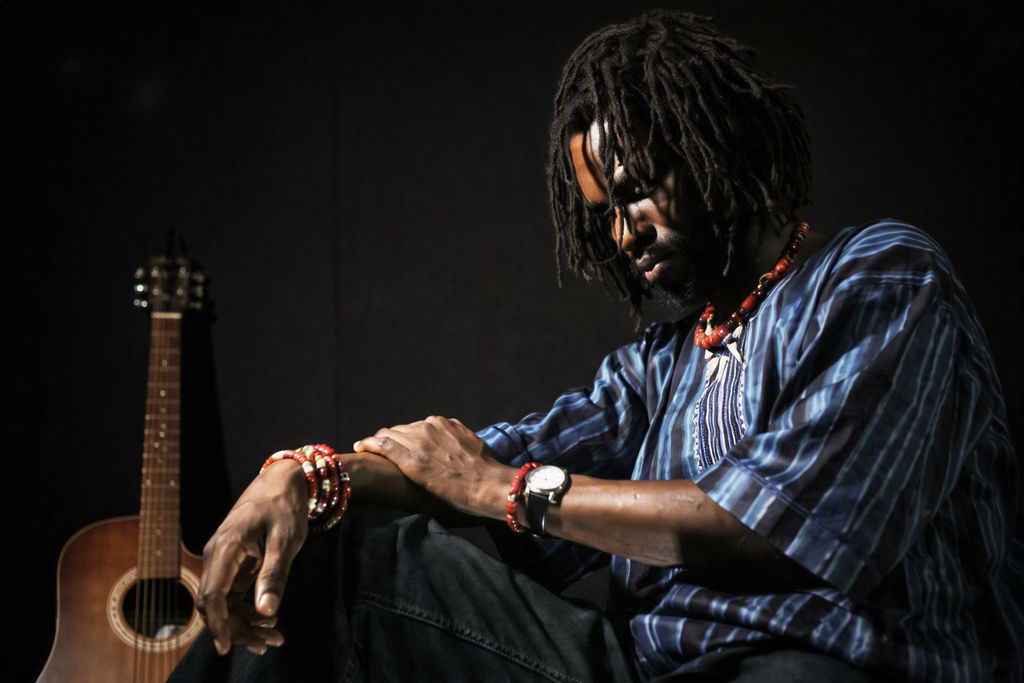
Segun Akinlolu, better known as Beautiful Nubia, is a Nigerian composer, arranger, bandleader, poet and writer whose work has, for decades, brought music, language, African cultural memory and social consciousness into the same artistic space.
Born in Ibadan in 1968, Akinlolu studied veterinary medicine at the University of Ibadan and worked in the profession for eight years before becoming a full-time artist. In 1997, he adopted the name Beautiful Nubia, and a year later formed the Roots Renaissance Band. His official biography describes the group as a contemporary folk and roots music ensemble with a strong Nigerian identity.
His artistic journey has never been confined to recorded music. As Segun Akinlolu, he has released poetry recordings including On A Cold Evening, Where Rivers Sing A Song and Like A Tale At Night. His published works include poetry, an autobiography, children’s literature, fiction and a collection of song lyrics. His official discography also lists A Few More Tales from a Small Room, released in 2026, alongside a catalogue that stretches back to the 1990s.
In 2010, he founded the EniObanke Music Festival, EMUfest, a multi-city annual festival centred on folk and roots music. The festival provides another expression of his commitment to keeping traditional and indigenous artistic forms visible within contemporary culture.
Akinlolu was awarded a Doctorate in Science, Honoris Causa in Art, by ESEP Le Berger University in the Republic of Benin in 2016 for his body of work. In 2024, the University of Ibadan also honoured him as a “UI at 75 Ambassador”.
Why He Matters
Beautiful Nubia matters because his work demonstrates that cultural preservation does not have to mean looking backwards.
He has spent decades taking elements of Nigerian folk traditions, indigenous wisdom, language and storytelling and placing them within contemporary music and literature. The result is an artistic practice that treats culture as something living, evolving and capable of speaking to present-day realities.
This is supported by independent scholarship. A 2024 study in the Journal of Linguistics, Culture and Communication analysed ten of Beautiful Nubia’s songs and found that his work consistently engages themes including patriotism, justice and equity, national courage and resilience, cultural preservation and linguistic identity. The study concludes that he uses music and performance as forms of public enlightenment and social advocacy.
That gives his work significance beyond entertainment.
His songs can carry social messages. His poetry creates another space for reflection. His festival work creates a platform for folk and roots traditions. Together, these parts of his career show an artist concerned not only with making music, but with what music can preserve, communicate and pass on.

Cultural Significance
- Preserving African cultural expression: Beautiful Nubia’s work is rooted in Nigerian folk traditions and indigenous wisdom, while remaining accessible within a contemporary musical environment.
- Keeping language connected to identity: His music has been studied for its engagement with linguistic identity and cultural preservation, showing how language can function as an important part of cultural consciousness.
- Bringing poetry and music together: His catalogue includes both music and poetry recordings, while his literary work spans poetry, fiction, autobiography, children’s literature and song lyrics.
- Creating cultural platforms: Through EMUfest, he established a multi-city festival dedicated to folk and roots music, extending his cultural work beyond his own recordings.
- Reclaiming African historical memory: Beautiful Nubia has explained that his stage name is deliberately connected to ancient Nubia. He says the name is intended to remind African youth that Africans have a history that extends beyond narratives of slavery, colonisation and marginalisation, including achievements in philosophy, science and the arts.
- Using art for social consciousness: Academic research identifies social advocacy as a defining feature of selected songs in his catalogue, particularly around justice, equity, patriotism, resilience and social responsibility.

TCMP Editorial Note
Beautiful Nubia represents cultural continuity through active creation.
His contribution to African culture is not simply that he has preserved sounds from the past. It is that he has continued to create with them, write with them, perform with them and build platforms around them.
For decades, Dr Segun Akinlolu has operated across music, poetry, literature and cultural programming. His work shows that African cultural identity can be both deeply rooted and contemporary, both local in language and universal in message.
In an era when African culture is receiving unprecedented global attention, artists like Beautiful Nubia remind us that cultural influence begins with knowing what is worth preserving.
For TCMP, Beautiful Nubia is the Celebrity of the Week because his career represents more than music. It represents a sustained effort to keep African memory, language, poetry and cultural consciousness alive through art.

Seun Oni is a UK-based entertainment journalist recognised for her polished voice and incisive cultural reporting. She covers film, television, music and celebrity culture with a confident blend of industry awareness and human-centred storytelling. Her work spotlights emerging talent, shifting creative landscapes and the narratives shaping modern entertainment, establishing her as a credible and compelling voice in the field.


