

Part Two: The Alarming Reality of Fatherlessness and Its Ripple Effects
By David Ola
The devastating statistics and stories behind the crisis of absent fathers in the modern age.
The first part of this series focused on the beauty and necessity of the African communal framework, a village where children in African societies are raised, nurtured and trained by a community of responsible individuals.
But to understand and accept the value of something, we must also recognise what happens when it is lost.
We must confront the grim reality of fatherlessness in our society.
It is a spectre haunting our communities. Its effects are no longer contained to statistics but are evident in the damage being done to the growing child, staring us in the face and tearing at the moral and social fabric of our societies.
George Foreman, a legendary father of ten, a man who rose from a difficult childhood and grew up in a single parent home, offers piercing insight into this crisis. Through his book Fatherhood by George, Foreman reflects on his experience as a son, a father and a grandfather, sharing lessons on the challenges and responsibilities of fatherhood. His story is a testament to the fact that while one may overcome a difficult beginning, the absence of a father can leave a void that success alone does not necessarily erase.
The statistical impact of father absence paints a troubling portrait.
A 1998 publication by the United States Department of Justice reported that 63 per cent of youth suicides, 70 per cent of youths in state institutions, 71 per cent of high school dropouts and 85 per cent of children exhibiting behavioural disorders came from fatherless homes.
These figures are historical and should therefore not be presented as a current statistical picture of society. They nevertheless point to a concern that has been recognised for decades, the relationship between father absence and a range of social and developmental difficulties.
These are not merely data points. They represent real lives, real children and real families, particularly boys who may become lost men, unable to navigate the complexities of life because they lacked a guide.
Boy Without a Father
A boy without a father is like a ship without a compass.
He is left to navigate the treacherous waters of adolescence and adulthood, often learning through trial and error the lessons that should have been taught through relationship, correction, example and love.
The absence of a father figure can be associated with a range of negative outcomes, including behavioural problems, substance abuse and a greater likelihood of incarceration. For boys in particular, the absence of a consistent male role model can leave a significant vacuum at a critical stage of development.
This is a crisis of masculinity that society is still struggling to confront properly, particularly because the communal structures that once helped nurture and guide the child are themselves becoming weaker.
Without a father to model virtues such as moderation, compassion, responsibility and restraint, boys can become susceptible to “hyper-masculinity posers” who offer a distorted and often misogynistic view of manhood.
These influences teach aggression as strength, domination as leadership and power without responsibility. The result can be a society of “boys” in men’s bodies, seeking approval and validation in the wrong places, whether on the streets, social media or in toxic relationships.
Impact on the Family Unit
The absence of a father is not just a loss for the boy; it can become a destabilising force on the entire family unit.
In many traditional African societies, the father is regarded as the “pillar of the home”, the strong arm of guidance that provides stability and direction. His responsibility is not simply to provide financially, but also to participate actively in the formation of the child, to discipline, protect, teach and model the kind of man the boy is expected to become.
When the father is absent, the mother, who is already playing her indispensable role, is often forced to bear an immense and often crushing weight. She becomes both the nurturer and the disciplinarian, the provider and the comforter, while carrying the emotional burden of holding the family together.
The traditional African understanding of family is rooted in complementarity, a “left and right hand” approach to parenting in which different responsibilities work together for the good of the whole. In some Yoruba and African traditions, the father can be understood as the “right hand of discipline”, while the mother represents the “left hand of comfort”.
When the right hand is disengaged, the left hand becomes overwhelmed.
The ripple effect can be a fractured home. The mother becomes exhausted, the family structure becomes strained and the children, especially the boys, may lack the boundaries and moral guidance necessary to channel their energy constructively.
This can create an intergenerational cycle of dysfunction, where boys who grow up without fathers become fathers who struggle to stay, navigate life and face the challenges that come with raising another generation.
A Crisis of Purpose
In the end, the ultimate effect of fatherlessness is a crisis of purpose.
A child who is not guided by his father’s hand may be left to define his own identity according to the fleeting and fragile standards of a fallen world. He may lack the sense of legacy that comes from being rooted in a family tree and knowing that he belongs to something larger than himself.
Ken Canfield, founder of the National Center for Fathering, provides a sobering reminder in his book The Heart of a Father:
“A father has enormous power. About this, he has no choice. For good or for bad, by his presence or absence, action or inaction, whether abusive or nurturing, the fact remains: a father is one of the most powerful beings on earth.”
The power of fatherhood is therefore not optional. A father has influence whether he chooses to acknowledge it or not. His presence matters, his absence matters, his actions matter and even his inaction matters.
If we are to save our boys from becoming lost statistics, we must address the root of the crisis.
Strategic Intervention of the Village
The father’s role is foundational, and his intentionality determines the village’s success. However, when the biological father is absent, the community must take on an even more intentional role.
The village cannot simply observe the vacuum and hope that something will eventually fill it. It must deliberately step into that space and ensure that a child does not grow up without responsible adults who are willing to guide, mentor and challenge him.
The community must establish intentional mentoring programmes within religious spaces, community centres and schools, where boys can be paired with stable and responsible male role models who can provide guidance, accountability and encouragement.
The purpose is not to pretend that another man can replace a biological father, but to ensure that fatherlessness does not become a life sentence of isolation. A boy should have men around him who can teach him how to work, how to fail, how to apologise, how to manage money, how to treat women, how to control his temper and how to take responsibility.
In most African societies and communities across the diaspora, the church or other religious spaces could be said to have replaced the traditional village square. If that is the case, then the community must deliberately reclaim these spaces as hubs for parenting, mentoring and character formation.
Fathers in the congregation must be mobilised to offer an “apprenticeship” to boys in the community, teaching them trade skills, financial discipline, responsibility, service and character.
The community must also agree on the values it wants to collectively instil in its children, common decency, respect for others, hard work, self-discipline, responsibility, compassion and a rejection of greed. This becomes particularly important in the diaspora, where children are exposed to conflicting cultural values and competing definitions of success.
The community must also create stronger support systems for single mothers. The extended family and wider community must help provide for the child’s holistic needs, including finance, education, skills acquisition, value development and emotional wellbeing.
A fatherless child, particularly a boy, should not be left to fend for himself or navigate through life alone.
The absence of a biological father should never become the absence of fathering.
This is not about blaming mothers, nor is it about pretending that every fatherless child will fail. It is about recognising that children need community, boys need responsible men to guide them, mothers need support and fathers need to understand that their role cannot be outsourced.
The African village was never perfect, but it understood something that modern society appears to have forgotten, raising a child was never meant to be the responsibility of one household alone.
When the village disappears, the child is left exposed.
When the village returns, the child has a better chance of finding his place, understanding his responsibility and becoming the man he was created to be.
And this brings us back to the father.
The father is not merely the man who helped bring the child into the world. He is one of the people entrusted with helping that child understand the world and, more importantly, understand himself.
The mandate, therefore, is not simply to have children.
It is to father them.
To be continued.
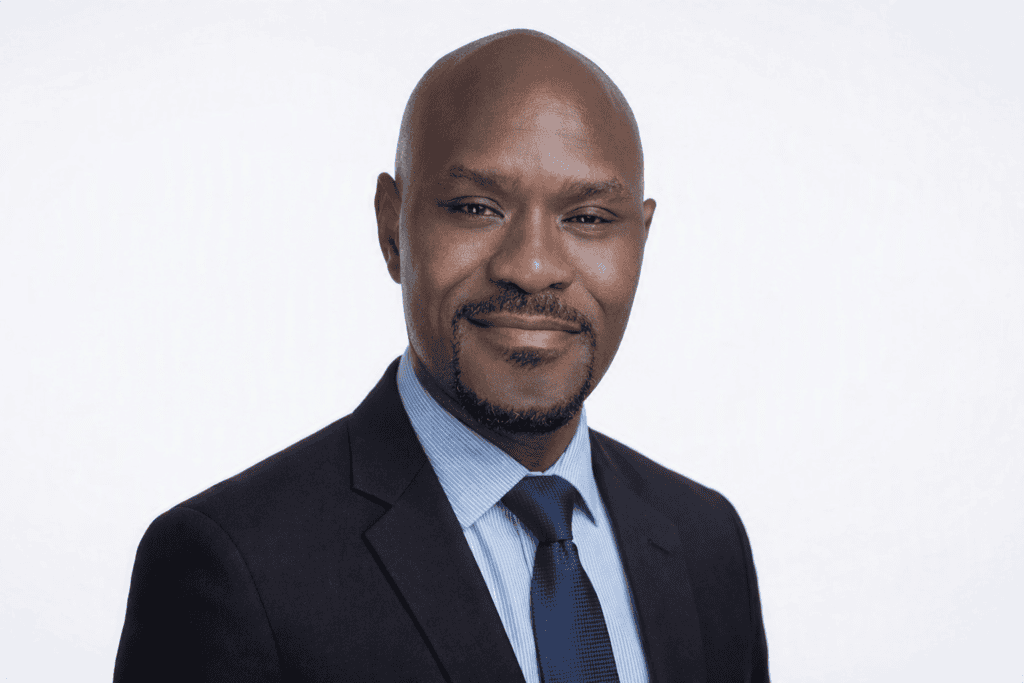
David Ola is a digital media broadcaster, African storyteller and research scholar with over a decade of experience in journalism, strategic communication, academic mentorship and chaplaincy. A writer and analyst, he combines media practice with research rigour to craft narratives that inform and inspire. His work spans digital storytelling, broadcast media, development communication and evidence-based journalism.