
Part 3: The Path to Freedom
By David Ola
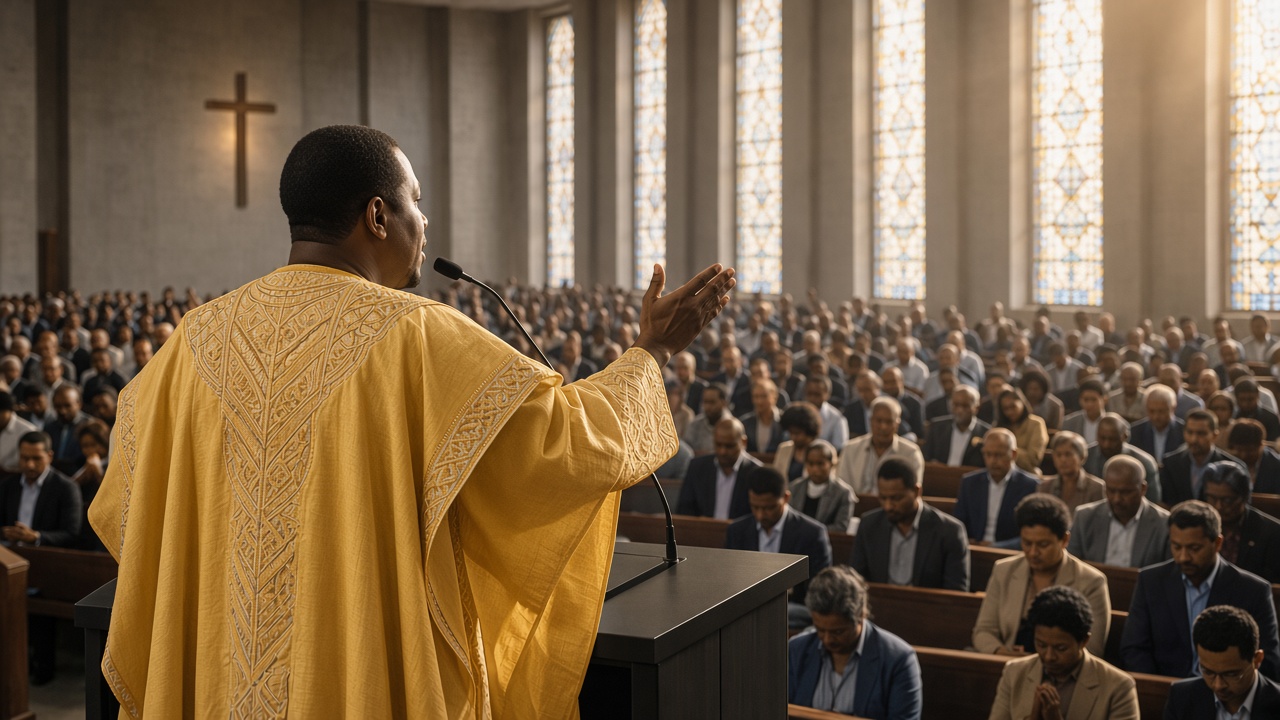
One Father and One Mediator
The gospel of Jesus Christ establishes one Father, who is God, and one Mediator, who is Christ. When we come to Christ, we are adopted into God’s family and given direct access to the Father through the Holy Spirit. We are no longer outsiders trying to reach God through another human being. We are sons and daughters who have been brought near through Christ.
This is where the conversation about spiritual fatherhood must begin. If Christ has already given us access to the Father, why should any human being position himself as a permanent spiritual gateway between God’s children and God? When a system of spiritual fatherhood creates such dependency, it can undermine the very adoption that the gospel gives us.
The Church Must Produce Mature Believers.
The way forward for the Church is not to multiply spiritual fathers, but to raise mature believers who know Christ, understand Scripture and can stand firmly in their faith without being controlled by another person.
Church leaders are undershepherds of the Great Shepherd. Their responsibility is to nurture, guide, teach and mentor God’s people, but they must never take the place of God.
A healthy leader should want to see believers become stronger in Christ, not increasingly dependent on him. He should rejoice when people grow to the point where they can study Scripture, pray, discern and make godly decisions without constantly needing his permission.
That is what Christian leadership should produce: spiritual maturity.
Leadership Is About Service, Not Control
Church leaders have a fundamental role in biblical reformation and in helping believers become more like Christ, and that responsibility begins with their example. Christian leadership should reflect Christ, not manipulation, intimidation or the demand for unquestionable loyalty.
Leaders are called to teach the priesthood of all believers, equip the saints for ministry and help people fulfil their God given purpose. They should not build systems around themselves that make their presence indispensable.
Honour is not the problem, neither is respect the subject. The problem begins when honour becomes elevation and respect becomes unquestionable authority. No title should compete with the place that belongs to God.
Paul’s Example of Spiritual Fatherhood
The Apostle Paul’s example helps us understand genuine spiritual fatherhood. Paul described himself as a father to the Corinthians because he had brought them to faith through the gospel (1 Corinthians 4:15). He also referred to Timothy and Titus as his “true child in the faith” (1 Timothy 1:2; Titus 1:4).
Yet Paul’s ultimate goal was to present every person mature in Christ (Colossians 1:28). His fatherhood was therefore about bringing people to faith, nurturing them and helping them grow. It was not about establishing permanent control or demanding lifelong dependence.
Paul did not want believers to remain spiritual children forever. He wanted them to become mature in Christ.
When Religion Takes the Place of Christ
Every Christian must ask a difficult but necessary question: Where is my ultimate confidence?
Is it in Christ, or in my denomination? Is it in Scripture, or in the personality of my leader? Is my identity in Christ, or have I become so attached to a church organisation that I can no longer separate the organisation from the gospel?
Religion, denomination and even the Church can become idols when they displace Christ. A leader can also become an idol when people are discouraged from asking questions, examining Scripture or thinking for themselves.
Grace brings freedom because it reminds us that our relationship with God is established through Christ.
The Fatherhood of God Is Enough
The Fatherhood of God is enough. God does not need a human substitute to complete His fatherhood, nor does He need another person to become a permanent gateway between Him and His children.
This is why we must stop fighting blindly for church leaders, General Overseers and denominational heads. God is able to defend Himself, His Church and the servants He has called. He does not need us to defend practices that contradict His Word simply because those practices are associated with respected leaders.
When we fight blindly for our leaders, we can end up protecting what Scripture condemns. We can excuse misconduct because of a title, defend questionable practices because of reputation and silence legitimate questions because we have been taught that questioning a leader is rebellion.
When loyalty to a man becomes stronger than loyalty to truth, something has gone wrong.
Our Loyalty Must Be to Christ
Our loyalty should be to Christ, not to a man. Our unity should be in the gospel, not in a denomination, and our identity should be in Christ, not in a church organisation.
This does not mean that Christians should reject leadership. Scripture clearly teaches leadership. It means that Christian leadership must remain under the authority of Christ and His Word.
A leader can be respected without being idolised, honoured without being worshipped and followed without becoming the centre of someone’s faith.
Recovering the Priesthood of All Believers
The New Testament doctrine of the priesthood of all believers is one of the most liberating truths of the gospel. Every believer has direct access to God through Christ, the sole Mediator between God and humanity (1 Timothy 2:5).
This does not remove the need for leaders. Instead, it gives leaders the right understanding of their responsibility. They are called to equip the saints for ministry (Ephesians 4:11–12), not to monopolise ministry. Peter instructs shepherds to care for God’s flock, not to lord it over those entrusted to them (1 Peter 5:2–3).
A leader who deliberately keeps believers in a state of permanent dependency has misunderstood Christian leadership. The purpose of leadership is to help people become mature in Christ.
The “Daddy” and “Spiritual Father” Culture
The conversation around expressions such as “daddy,” “spiritual father” and “father in the Lord” also deserves serious attention, particularly within African Christianity.
The issue is not merely the word “daddy.” The deeper question is what the culture surrounding the word produces. If mature men and women are continually treated as spiritual children who supposedly need a human father to guide their relationship with God, dependency has replaced maturity.
The remedy is to recover the Fatherhood of God and teach believers to grow up in Christ.
Return to the Gospel
The gospel is the good news that God became man in Jesus Christ, born of a virgin, fully God and fully man. He lived a sinless life, proclaimed the Kingdom of God, died on the cross for our sins, was buried, rose again on the third day and will return to judge the world and establish His kingdom.
This is the gospel.
Prosperity, success, healing and other blessings may accompany the gospel, but they are not the gospel itself. The spiritual father phenomenon becomes dangerous when attention shifts from the Saviour to the leader and from Christ to the personality standing behind the pulpit.
The answer is a return to Christ. We must return to Scripture, recover the priesthood of all believers, restore servant leadership, encourage healthy spiritual mentorship and teach the whole counsel of the gospel.
The Question That Matters
The question is not whether you have a spiritual father. The real question is whether you have grace.
Religion, denomination and even the Church can become idols when they displace the gospel. Grace liberates because it declares that we have direct access to God through Christ.
In Christ, God Himself is our Father, and in Him, we are truly free.
David Ola is a digital media broadcaster, African storyteller and research scholar with over a decade of experience in journalism, strategic communication, academic mentorship and chaplaincy. A writer and analyst, he combines media practice with research rigour to craft narratives that inform and inspire. His work spans digital storytelling, broadcast media, development communication and evidence-based journalism.