Chatham House and the Politics of International Recognition
An examination of African sovereignty, political legitimacy, intellectual confidence and the influence of Western institutions on African political discourse.
The Question That Started It All
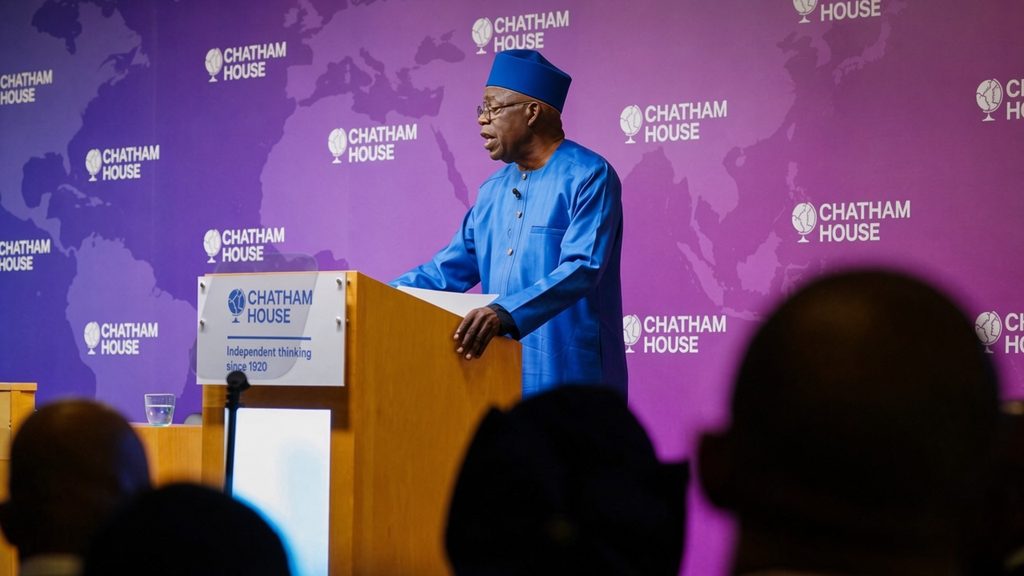
A friend recently raised a question that deserves serious reflection. Why do Nigerian and other African political leaders travel to Chatham House in London to address international audiences? If our countries are independent, what exactly are our leaders seeking from a British policy institution? Is it diplomatic engagement, international exposure, investor confidence or political validation?
His concern goes beyond the choice of venue. He questions why leaders who struggle to command public confidence at home appear eager to present their political ambitions before influential foreign audiences. He also asks why Nigerian media organisations, formerly, cannot provide comparable platforms for communicating national priorities internationally.
These questions deserve more than a defensive response. They require an examination of what Chatham House represents, the influence it exercises and what its prominence in African political engagement reveals about the continent’s relationship with international power.
Understanding Chatham House
Chatham House, formally known as the Royal Institute of International Affairs, is an independent international affairs think tank based in London. Established in 1920, it conducts policy research and convenes politicians, diplomats, academics, business leaders and international policymakers. Its work covers international relations, security, governance and economic development, including an established Africa Programme.
Its historical origins matter. The institute emerged from discussions following the First World War, when Britain remained a major imperial power and Western countries exercised considerable influence over international political and economic arrangements.
Its present institutional identity should not be confused with that historical environment. Chatham House is not a British government department. However, its location, reputation and access to influential international networks give it considerable convening power.
It cannot confer democratic legitimacy on an African president. It can provide access to influential policymakers, investors and diplomats, while helping shape international conversations about African countries.
Why Do African Leaders Seek This Platform?
There are legitimate reasons for such engagements. International investment, trade, security cooperation and diplomatic relationships require communication with foreign governments and influential institutions. Presidential candidates also have an interest in explaining their programmes to audiences beyond their domestic political constituencies.
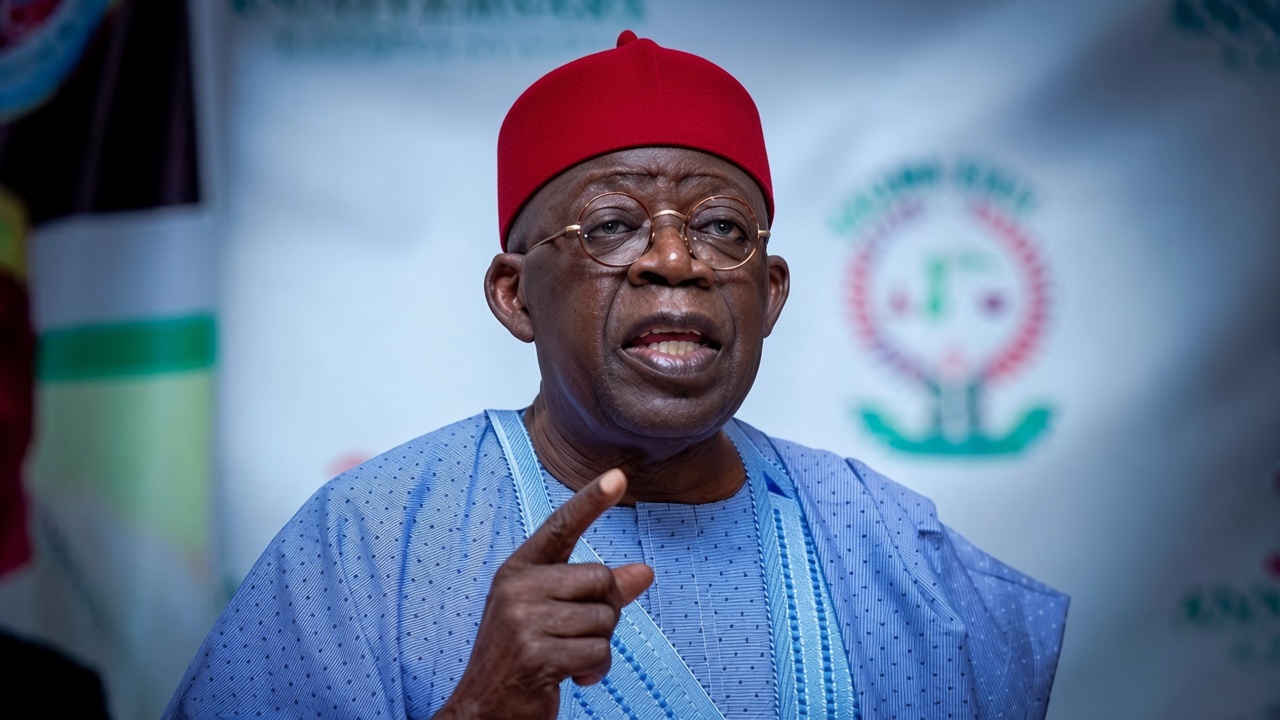
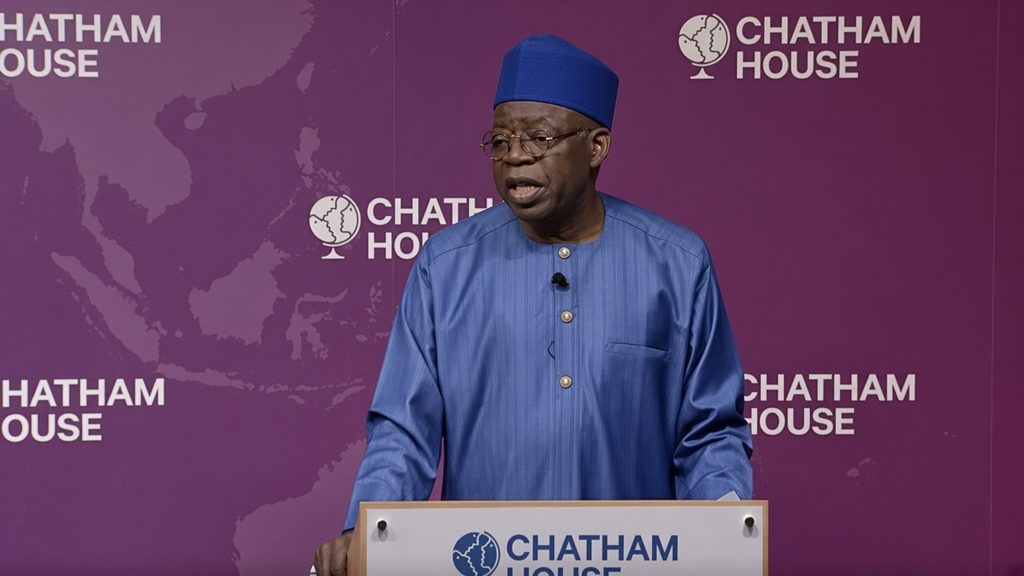
Nigeria’s 2023 presidential election offers a useful example. Bola Ahmed Tinubu, Peter Obi and Rabiu Musa Kwankwaso all addressed Chatham House during their campaigns. The institution was therefore not exclusively a platform for incumbent governments. Opposition candidates also considered it strategically valuable.
However, diplomatic engagement and political image management can operate simultaneously. Appearing before an internationally recognised institution can help a politician project global relevance, policy competence and international acceptability.
The critical question is whether the prestige of the platform becomes more important than the substance of the engagement. What commitments are made? What difficult questions are asked? What follows after the speeches?
An appearance is not an achievement. A speech is not a policy, and a policy announcement is not implementation.
International Recognition Versus Domestic Legitimacy
This is where my friend’s argument becomes particularly important.
Domestic legitimacy and international recognition are fundamentally different. Democratic legitimacy derives from constitutional processes, credible elections, institutional accountability and public confidence. International recognition develops through diplomatic relationships and engagement with foreign governments and influential organisations.
The two can complement each other, but neither can replace the other.
An African president may receive international attention and deliver impressive speeches while citizens at home demand answers about insecurity, unemployment, corruption, inflation and failing public services.
There is an uncomfortable contradiction when leaders invest considerable effort in explaining their ambitions to international audiences but demonstrate less willingness to submit their records to sustained domestic scrutiny.
Why should international audiences receive carefully prepared explanations while citizens directly affected by government decisions struggle to obtain satisfactory answers?
A speech in London cannot substitute for accountability in Abuja or Accra. Equally, international engagement should not be dismissed simply because it takes place outside Africa.
Colonial History and Intellectual Sovereignty
Africa’s colonial history cannot be separated from this debate. Political independence did not automatically dismantle the economic, diplomatic and intellectual structures inherited from colonial rule.
Many African countries continue to operate within international systems substantially shaped by Western financial institutions, diplomatic networks and economic interests.
This does not mean Africa remains politically colonised. It raises a more difficult question about intellectual sovereignty.
Intellectual sovereignty means having the capacity to produce knowledge, develop policy solutions, fund independent research and influence international debates without excessive dependence on external recognition.
The concern is not that African leaders visit Western institutions. It is whether African governments attach greater prestige to foreign platforms than to the institutions responsible for developing knowledge and policy on the continent.
Has Chatham House Helped or Harmed Africa?
A fair assessment must recognise its documented research contributions. Its 2025 publication, Taking Action Against Corruption in Nigeria, examines the social expectations and institutional weaknesses that sustain corrupt practices. It draws on research, including a national household survey conducted in partnership with Nigeria’s National Bureau of Statistics, and proposes ways to strengthen accountability and support reform.
Such work contributes to policy discussions and brings important issues to international attention.
However, research output must not be confused with measurable political progress. A report on corruption does not establish that corruption has declined. A conference involving African leaders does not prove that democratic institutions have become stronger.
There is also a legitimate question about institutional funding. Chatham House receives support from philanthropic, research and membership sources. It states that it receives no subsidy from the British government. These facts should be acknowledged, but they do not remove the need for scrutiny of funding transparency, research independence and the interests surrounding particular policy programmes.
Funding alone does not establish donor control. Equally, institutional claims of independence should not place any organisation beyond critical examination.
The proper assessment must examine policy influence, government implementation and tangible outcomes, rather than assume either unquestionable benefit or deliberate harm.
Why Not Strengthen African Institutions?
Nigeria has the Nigerian Institute of International Affairs, an established institution dedicated to international relations and foreign policy research. Africa also has the African Union, ECOWAS, the Institute for Security Studies and other research organisations.
ARISE News and Channels Television can provide substantial public scrutiny and international exposure. Broadcasting organisations and policy think tanks perform different functions, but they should complement one another.
The deeper question is why African governments have not invested sufficiently in making their research institutions globally influential. Why do many African policy organisations struggle for visibility, funding and access while foreign institutions attract senior African political figures?
This is not solely an institutional failure. It is also a question of political priorities, research funding and the willingness of African governments to support independent institutions capable of challenging them.
The Real Test of African Sovereignty
Ultimately, the debate is bigger than Chatham House. It concerns how African leaders understand independence, international recognition and national responsibility.
There is nothing inherently wrong with an African president addressing an international policy institution. Diplomacy requires engagement. The problem arises when international prestige is treated as evidence of political credibility, or when foreign recognition receives greater attention than domestic accountability.
The more important question is not simply why African leaders visit Chatham House. It is why African countries have not invested sufficiently in building institutions that command comparable international attention and intellectual influence.
If our leaders can travel to London to explain their vision for national transformation, they must also demonstrate the willingness to defend their records before the people they govern.
Political independence must mean more than a national flag, an anthem and a seat at the United Nations. It must be reflected in strong institutions, economic resilience, intellectual confidence and leaders who remain accountable to their citizens. Only then can Africa engage the world not as a continent seeking validation, but as a partner capable of shaping global conversations on its own terms.