

By Felix Nyerhovwo Jarikre
Japa Is More Than an Economic Problem
As a young banker in the early 1980s, like many of my colleagues, I did not see going abroad as an opportunity to abandon Nigeria.
Going abroad meant acquiring relevant education and skills, with the expectation of returning home to contribute to national development. Permanent relocation as a survival strategy was largely alien to our thinking.
That has changed.
Today, Nigerians leave the country in unprecedented numbers. We call it Japa. The usual explanations are unemployment, insecurity, poor infrastructure, weak institutions and declining economic opportunities.
All of these are real.
But I submit that beneath the search for better opportunities lies a deeper problem, the fear of internal domination.
The Fear of Internal Domination
Nigeria has struggled to resolve this fear since independence. It has manifested itself in corruption, impunity, nepotism, cronyism and the persistent feeling that access to government is a pathway to privilege rather than public service.
To understand this, we must briefly return to the struggle for independence.
Nigeria’s nationalist leaders resisted colonial rule because Nigerians were denied meaningful control over their own affairs. They wanted greater control over legislation, resources, trade and development. They wanted dignity and equal opportunity.
Chief Anthony Enahoro’s famous 1953 motion demanding self-government in 1956 captured that urgency. Northern political leaders resisted the fixed date, arguing for self-government “as soon as practicable”. The disagreement exposed a deeper anxiety, particularly the fear that the more educationally advanced South could dominate the North.
The minorities had their own fears.
Thus, even before independence, the question of who would dominate whom was already embedded in Nigeria’s political consciousness.
Independence transferred political authority from colonial rule to Nigerian hands, but it did not automatically resolve that fear. The Nigerian Civil War demonstrated how destructive unresolved questions of domination, identity and political security could become.
What Jesus Says About Political Leadership
This is where the teaching of Jesus becomes relevant to the Nigerian leadership question.
In Luke 22:24 to 27, the disciples argued about who should be regarded as the greatest. Jesus responded by contrasting their desired leadership with the model of the kings of the Gentiles, who exercise authority over those under them and are called benefactors.
His instruction was radical: the greatest must become as the younger, and the leader as one who serves.
This is fundamentally different from the Nigerian political culture of the benefactor.
The Nigerian Political Benefactor
The political benefactor distributes favours while institutions remain weak. He may offer scholarships, distribute food during festive periods, intervene in individual cases and build selected projects, while public education, healthcare, electricity, industrialisation and accountability remain inadequate.
The closer citizens are to the benefactor, the easier their lives become. The further they are from him, the harder life becomes.
That is not sovereign governmental leadership.
It is dependency.
Jesus presents another model.
In the Kingdom of God, leadership is not about domination. It is about service. The leader does not exist above the people. He exists for the people.
This distinction matters enormously for Nigeria.
Our public religion has too often become preoccupied with personalities, titles, rituals and institutional power, while the transformation of human consciousness receives less attention. When religion becomes entangled with political patronage, it can reinforce the very dependency that genuine faith ought to challenge.
From Dependency to Sovereign Leadership
The answer, therefore, is not merely to persuade Nigerians to stay.
We must build a country they can trust enough to remain in.
Reversing Japa requires more than economic incentives. It requires sovereign governmental leadership, leadership that is accountable, truthful, competent and committed to the welfare of the people.
The Nigerian who leaves is not necessarily rejecting Nigeria.
He may simply be escaping a system in which his dignity, security and future depend too heavily on who he knows, which political godfather he serves, or how close he is to power.
If we want Nigerians to stay, we must confront the fear of internal domination.
We must replace the politics of the benefactor with the government of service.
Until that happens, Japa will remain less a flight from Nigeria than a verdict on the kind of Nigeria we have built.
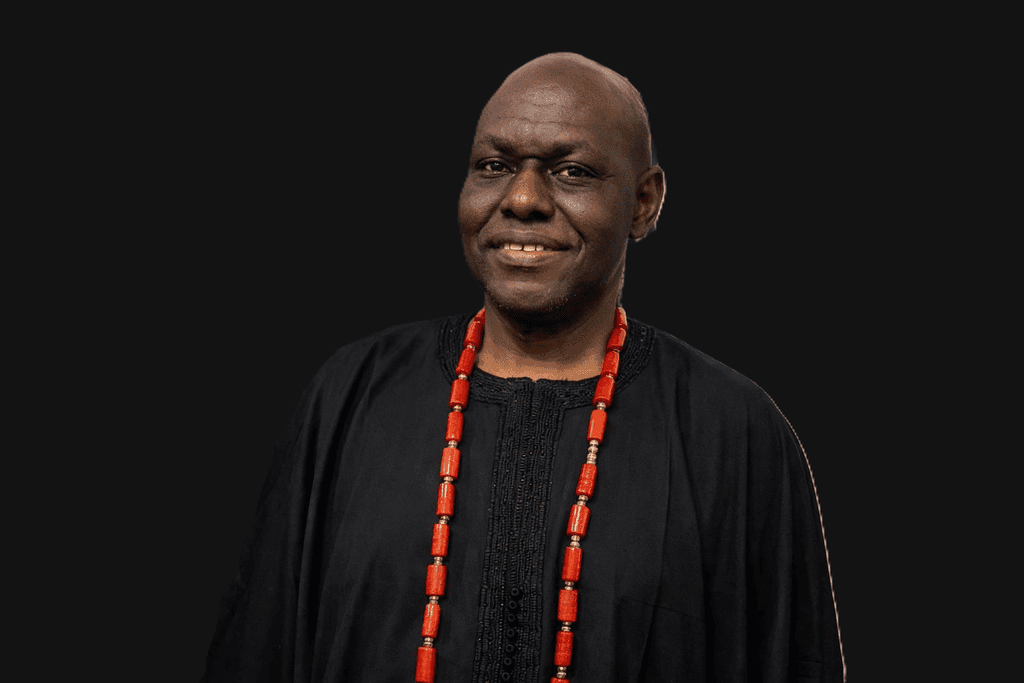
Felix Nyerhovwo Jarikre, a governmental leadership advocate, is an author (4 books), writer, conference speaker, and the pastor of Perfect Report, a Bible Study Group in Lekki Phase 2, Lagos, Nigeria. A widower, he is the father of many children.