

Can the World Create Rules Before AI Outpaces Them?
Artificial intelligence is advancing faster than many governments and institutions can respond. As AI systems become more powerful and increasingly embedded across society, policymakers face a defining challenge: can global governance frameworks keep pace with a technology that does not recognise national borders?
Artificial intelligence has moved far beyond research laboratories and technology companies. It now influences financial services, healthcare, education, cybersecurity, elections, national security, and everyday communication. As AI capabilities continue to advance, governance frameworks remain fragmented across jurisdictions, creating growing challenges for policymakers seeking to balance innovation, accountability, and public safety.
Governments and international organisations are now calling for stronger cooperation on AI governance. The challenge is not only how to regulate powerful AI systems, but how to create safeguards that encourage innovation while protecting society from emerging risks.
Experts argue that the future of AI oversight will require a combination of international cooperation, shared standards, cybersecurity protections, continuous monitoring, and clear accountability.
AI Has Outgrown Traditional Regulation
One of the biggest challenges facing policymakers is that traditional regulatory systems were designed for technologies that changed gradually. Artificial intelligence operates differently. Models can be updated, retrained, adapted, and deployed across multiple environments, creating new risks after initial approval.
Prof. Demetrius Floudas, Senior AI Researcher at the University of Cambridge and an expert in international AI policy, argues that AI governance has entered a critical stage where countries must find ways to cooperate despite competing national interests.
The difficulty is that AI development is global, while regulation remains largely national. A model can be created in one country, trained using international data, deployed by a company based elsewhere, and used by millions of people around the world.
This creates a major governance challenge: how can countries establish meaningful safeguards for a technology that operates beyond traditional legal boundaries?
Mumtaz Kynaston-Pearson, Principal Legal Counsel at Mimecast, believes part of the problem is that existing regulatory approaches often focus on the final product rather than the development process behind AI systems.
“The biggest shift isn’t a new category of attack,” she explains. “It’s the collapse in the cost and skill required to run existing attacks at scale.”
She argues that AI has reduced the barriers for cybercriminals, allowing convincing phishing messages, impersonation attempts, and social engineering campaigns to be created faster and at a much larger scale.
For organisations, this means security standards that were considered adequate a few years ago may no longer provide sufficient protection in an AI-driven threat environment.
The Challenge of Governing a Borderless Technology
The global nature of artificial intelligence has created debate over whether the world needs a single international regulatory authority or a shared system of standards adopted by different countries.
Hien Nguyen, Founder and CEO of Screate Labs, argues that the focus should not be on controlling AI through a single global institution, but on creating common protocols that allow countries and organisations to work together.
“AI has become a global technology governed by local rules. Models don’t recognise national borders, but regulations do,” She says.
Nguyen believes international cooperation should focus on shared principles around transparency, security, auditability, interoperability, and accountability.
She compares the future of AI governance to the development of internet standards, where common technical protocols allowed global connectivity while countries maintained their own laws and policies.
David B. Hoppe, Founder and Managing Partner of Gamma Law, highlights the importance of balancing innovation with accountability. He argues that policymakers must create frameworks that protect public trust without preventing responsible technological development.
Why AI Governance Matters Beyond Technology
The debate over AI regulation is not simply about software companies or researchers. It affects ordinary people and institutions that increasingly rely on AI-powered systems.
AI is already influencing decisions in recruitment, financial services, healthcare recommendations, fraud detection, customer support, and public information systems.
As these systems become more powerful, questions around responsibility become more important.
If an AI system makes a harmful decision, who is accountable? The developer? The company deploying it? The user? Or the system itself?
Experts argue that governance frameworks must answer these questions before AI becomes too deeply integrated into critical areas of society.
The New Cybersecurity Battlefield
Cybersecurity has become one of the most urgent areas of concern in the AI debate.
Jamshir Qureshi, Vice President of DevSecOps Engineering at MUFG Bank Ltd and IEEE S&P Distinguished Evaluator, warns that AI is changing the cybersecurity landscape, particularly in sectors such as financial services.
He argues that malicious actors can now use AI to automate information gathering and create highly personalised attacks at scale.
The threat is not only that existing attacks become more advanced. It is that attackers can operate faster and with fewer resources.
AI-generated phishing messages, deepfake voices, synthetic videos, and automated fraud campaigns are creating new challenges for organisations attempting to verify identities and protect sensitive systems.
Qureshi argues that businesses must move away from reactive cybersecurity approaches and adopt proactive AI-driven defence strategies.
This includes stronger testing, adversarial assessments, independent reviews, continuous monitoring, and clear accountability before advanced AI systems are deployed.
Joe Sullivan, cybersecurity executive and former security leader at Meta, Uber, and Cloudflare, argues that AI safety cannot become the responsibility of technology companies alone.
Governments, regulators, researchers, and businesses must share responsibility for managing the risks created by increasingly powerful systems.
AI, Elections and the Future of Public Trust
Beyond cybersecurity, experts warn that artificial intelligence could transform the way information spreads and influence democratic processes.
Carlos Correa, a specialist in corporate crisis management and AI influence operations, argues that the greatest danger is not simply the amount of AI-generated content, but the ability of AI systems to create highly personalised persuasion campaigns.
AI tools can analyse online behaviour and preferences to produce targeted messages designed to influence individuals or groups.
For democratic societies, this creates a difficult challenge. The issue is no longer only whether information is false, but whether citizens can distinguish between genuine public opinion and artificially generated influence.
Correa argues that governments and technology platforms will need stronger detection capabilities to identify coordinated manipulation before it spreads widely.
Building Accountability Into the Future of AI
While experts differ on the exact model of global AI governance, there is broad agreement that accountability must remain central.
Mahendra Balal, Editor-in-Chief and Technology Analyst at Sovereix, warns that one of the most underestimated challenges facing organisations is the rise of “Shadow AI”.
“The Shadow AI problem is extremely large and greatly underestimated by business executives,” he says.
Balal argues that employees are increasingly using unauthorised AI tools, creating risks around confidential information, intellectual property, and data security.
Rather than simply banning AI usage, he believes organisations should provide secure enterprise AI environments with appropriate safeguards.
He also argues that future AI regulation must move beyond one-time assessments and embrace continuous monitoring because AI systems can change after deployment.
Ankit Pathak, CEO of ConsultAdd Inc. and Co-Founder of POP, believes increasingly autonomous AI systems require stronger human oversight.
He argues that organisations must maintain clear responsibility for AI-assisted decisions and ensure accountability does not disappear behind automation.
SreeSudha Ayyalasomayajula, a software project manager and technical researcher, adds that AI should be treated as an infrastructure challenge requiring lifecycle governance, resilience planning, and clear human ownership.
Ranjith Raghunath, CEO of CX Data Labs, argues that governments must rebuild technical expertise if they want to effectively regulate advanced technologies. Without sufficient internal capability, regulators risk becoming dependent on the companies they are attempting to oversee.
The Future of Global AI Governance
The race to govern artificial intelligence is only beginning.
Countries continue to disagree on how much regulation is necessary, how innovation should be protected, and who should oversee the development of advanced AI systems.
However, one point is becoming increasingly clear: traditional regulatory approaches alone will not be enough.
The future of AI governance will require international cooperation, shared standards, stronger cybersecurity practices, continuous oversight, and clear accountability structures.
The goal is not to stop AI progress. It is to ensure that technological advancement develops alongside public trust and responsibility.
The defining question of the AI era may not be whether humanity can build more intelligent machines, but whether it can build governance systems capable of managing them responsibly.
Experts and Contributors Who Informed This Report
Prof. Demetrius Floudas

Senior AI Researcher, University of Cambridge
Expertise: AI governance, international policy, global AI oversight.
“AI development is advancing in a global marketplace, while regulatory responses remain largely national. That mismatch is becoming increasingly difficult to manage.”
Mumtaz Kynaston-Pearson

Principal Legal Counsel, Mimecast
Expertise: AI governance, technology law, cybersecurity regulation, cross-border compliance.
“The biggest shift isn’t a new category of attack. It’s the collapse in the cost and skill required to run existing attacks at scale.”
Joe Sullivan

Cybersecurity Executive and AI Governance Adviser
Former security leader at Meta, Uber, and Cloudflare.
“Governments need to think beyond frontier AI labs and consider the broader governance challenges emerging across the entire AI ecosystem.”
Jamshir Qureshi
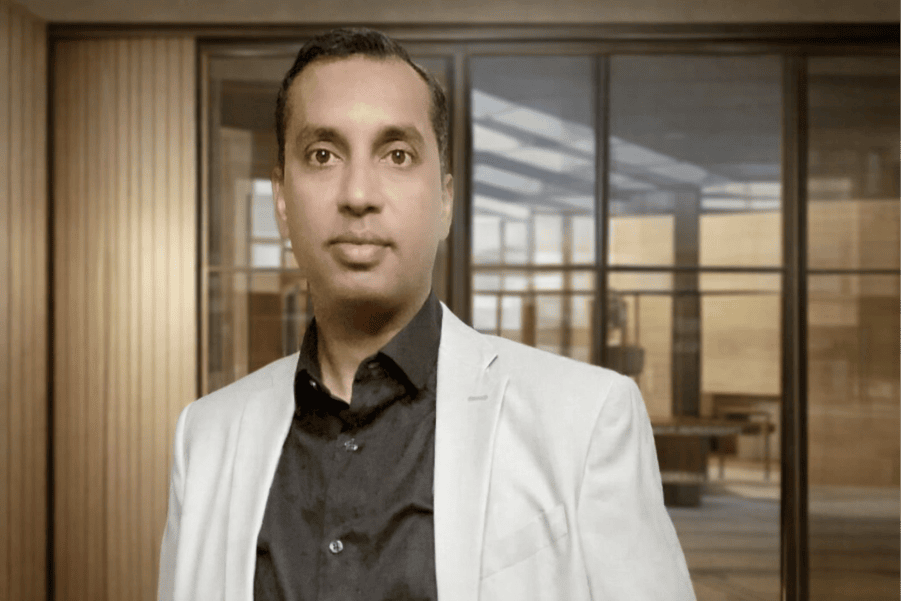
Vice President of DevSecOps Engineering, MUFG Bank Ltd | IEEE S&P Distinguished Evaluator
Expertise: AI security, financial services cybersecurity, AI risk management.
“The industry must move from reactive security routines to proactive, AI-guided defence mechanisms to maintain system stability.”
Carlos Correa
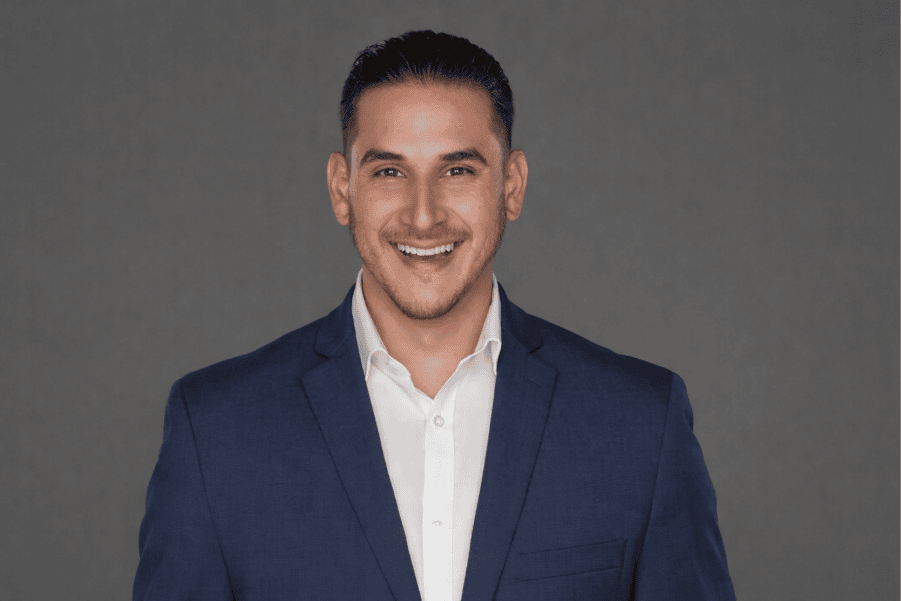
Corporate Crisis Management and AI Influence Operations Specialist
Expertise: Election integrity, misinformation, AI persuasion, influence campaigns.
“The threat to election integrity isn’t just the quantity of AI-generated content, but its unprecedented, psychologically targeted efficacy.”
David B. Hoppe

Founder and Managing Partner, Gamma Law
Expertise: AI law, technology governance, digital rights, emerging technology policy.
“The challenge for policymakers is creating governance frameworks that encourage innovation while maintaining accountability, transparency, and public trust.”
Hien Nguyen

Founder & CEO, Screate Labs
Expertise: “Hien Nguyen, Founder & CEO of Screate Labs, building Sidekick Log — Google Maps for conversations, a relationship intelligence layer between inbox and CRM, and offering a founder’s perspective on how emerging technologies should scale globally.”
“If we optimise for control, we concentrate power. If we optimise for protocols, we distribute opportunity.”
SreeSudha Ayyalasomayajula

Software Project Manager and Technical Researcher
Expertise: Systems governance, infrastructure resilience, lifecycle accountability.
“The core issue with AI governance is that AI behaves less like software and more like a complex, non-linear infrastructure.”
Ranjith Raghunath
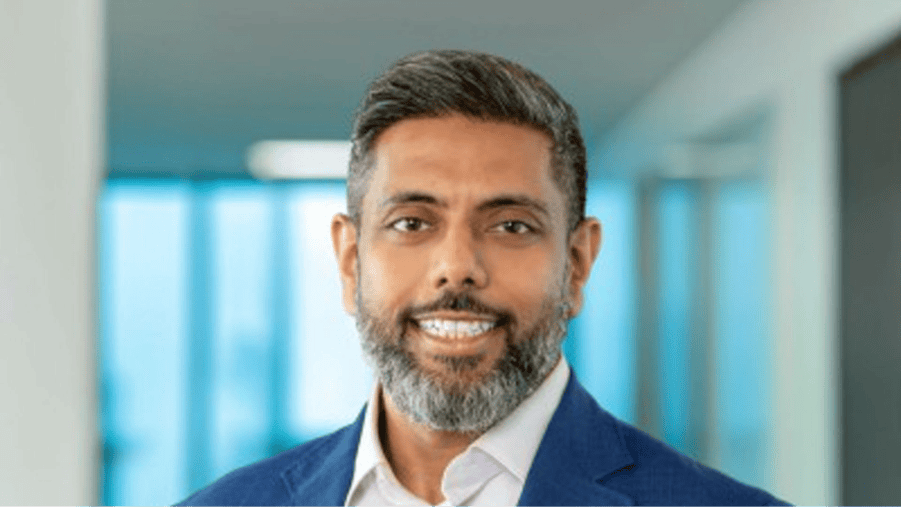
CEO, CX Data Labs
Expertise: Government technology capability, AI policy capacity, digital transformation.
“Governments often rely on the companies they’re trying to regulate because much of the technical expertise has migrated to the private sector.”