
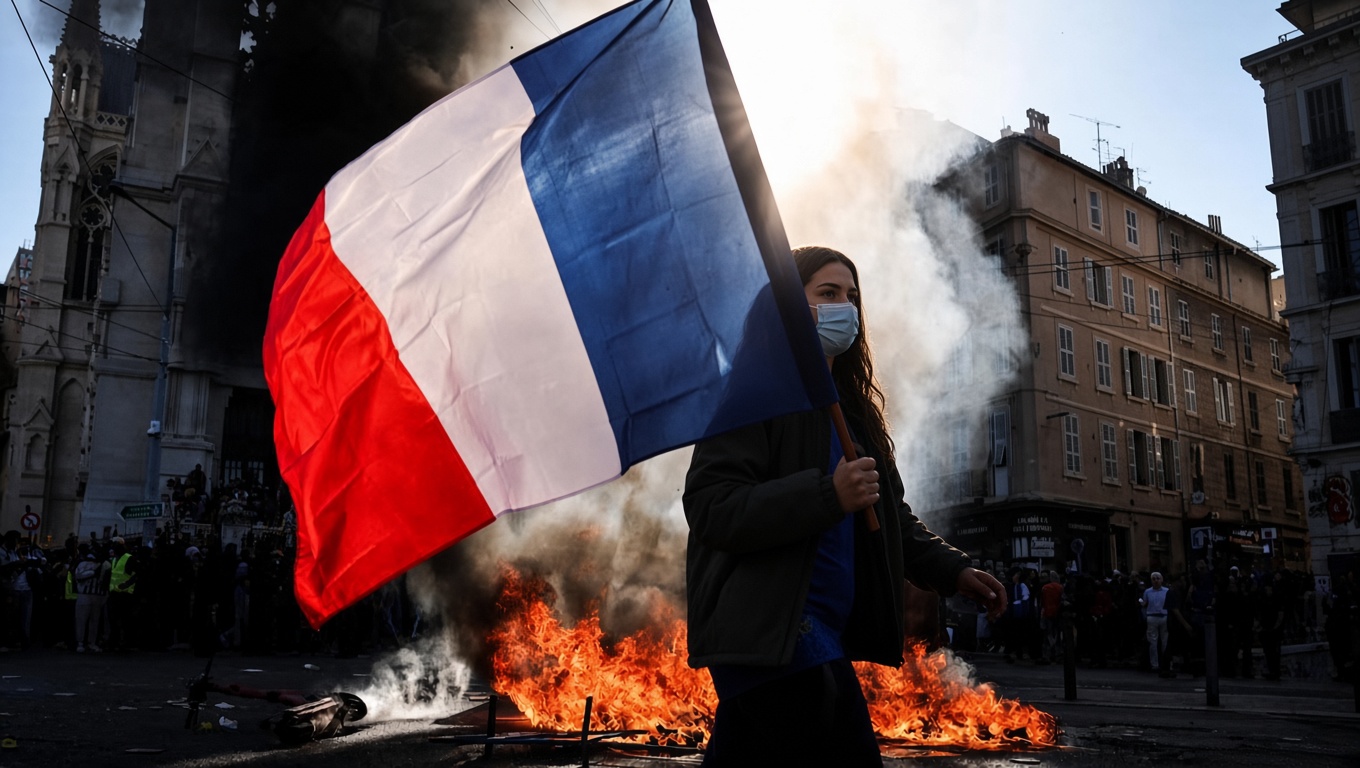
France’s latest unrest has renewed debate about immigration, economic hardship and political instability. However, focusing on immigration alone risks overlooking deeper questions about inequality, public services, political trust and France’s changing position in the world.
Demonstrations on 17 October 2026 over rising living costs and poor school conditions were accompanied by looting, arson and clashes with police in several cities. Initial reports recorded about 400 arrests on the first day.
By 18 October, the Associated Press reported at least 2,400 arrests, while later reports put the number of businesses damaged or looted at around 3,000. These were figures reported at the time, rather than final totals.
Immigration has featured prominently in political commentary about the unrest. However, reported grievances also included the cost of living and school conditions. Blaming immigration without examining these pressures risks reducing a complex crisis to a convenient political argument.
Economic pressures at home
President Emmanuel Macron’s government faces political divisions, pressure on public spending and growing demands for better public services. France’s national statistics institute, INSEE, reported that the public deficit stood at 5.1 per cent of gross domestic product in 2025, while public debt reached 115.7 per cent.
These figures do not explain the protests on their own, but they illustrate the financial pressures confronting a government expected to improve schools, strengthen public services and respond to the rising cost of living.
The destruction of businesses and public buildings must be condemned, and those responsible for criminal acts held accountable. However, condemning violence does not mean dismissing legitimate grievances. Understanding the unrest requires distinguishing criminal behaviour from the concerns expressed by peaceful demonstrators.
France’s changing relationship with Africa
France’s domestic challenges coincide with a significant shift in its relationship with Africa. Following independence, Paris maintained influence across parts of the continent through political ties, military cooperation, commercial interests and monetary arrangements. The system commonly known as Françafrique became associated with close, sometimes opaque relationships between French political leaders and African ruling elites.
The CFA franc remains a contested legacy of this relationship. Reforms introduced in 2019 in the eight-country West African monetary union ended the requirement to deposit foreign exchange reserves with the French Treasury and removed French representatives from certain governing bodies.
However, the currency’s peg to the euro and France’s convertibility guarantee remained. These reforms did not apply across the entire CFA franc zone. Supporters point to monetary stability, while critics argue that the arrangements continue to constrain monetary sovereignty.
The debate extends beyond currency arrangements. A 2026 study published in New Political Economy examined resource and labour flows between France and the CFA franc zone from 1990 to 2015. Its authors identified patterns of unequal exchange, including net flows of resources towards France.
The findings contribute to the debate over who benefits from these relationships, although the study does not establish that the CFA franc system alone caused the imbalances.
France’s influence has also weakened in parts of the Sahel. Mali, Burkina Faso and Niger have ended their French military partnerships and strengthened cooperation through the Alliance of Sahel States.
Their decisions reflect disputes over security, sovereignty and France’s role in the region. They do not represent every African country, but they demonstrate that Paris can no longer assume its former level of influence across the Sahel.
The consequences may extend beyond defence. Changing political relationships can affect trade, investment and access to markets. As African governments diversify their international partnerships, French companies may face greater competition and established commercial relationships may change.
The scale of any economic losses, however, must be established through trade and investment data, rather than inferred from military withdrawals alone.
Looking beyond easy explanations
France’s changing position in Africa does not establish a direct cause of its domestic unrest. The immediate grievances reported in October concern living costs and public services, while the country faces significant fiscal pressures.
The broader issue is that France is confronting demands for change at home as some of the international relationships that once reinforced its influence are being renegotiated or rejected. Its history with Africa raises important questions about unequal partnerships, economic interests and the limits of influence in a changing world.
For African countries, the challenge is to build partnerships that deliver fair and sustainable benefits without reproducing old dependencies. For France, it is to adapt to changing international relationships while addressing the concerns of its own citizens.
Neither immigration nor Africa should become a convenient scapegoat for France’s difficulties. The task is to examine the economic and political decisions shaping life at home while recognising that France’s place in the world is changing. Lasting stability depends on confronting these challenges honestly, rather than blaming outsiders.