Artificial intelligence has moved beyond a debate about capability. The new challenge is trust.
As AI systems enter workplaces, customer service, creative industries and everyday decision-making, the public is asking a harder question: not only what AI can do, but who is responsible when it goes wrong.
Anthropic’s latest campaign reflects a wider industry effort to address growing concerns about AI safety, employment disruption and responsible development. However, experts argue that acknowledging public concerns is only the beginning.
The bigger challenge is moving beyond statements and demonstrating proof.
Across AI governance, cybersecurity, law, workforce research and technology development, specialists say confidence in artificial intelligence will depend on measurable safeguards, independent verification and clear accountability when systems fail.
Confidence Must Be Built Through Evidence
Heath Squier, Founder and Chief AI Officer at EVKII, argues that responsible AI cannot be built around reassurance alone.
“Responsible AI messaging fails when it asks people to trust an aspiration instead of an operating practice,” Squier says.
He believes companies must provide clearer information about where AI is being used, what data their systems can access, which decisions remain under human control and how mistakes are identified and corrected.
For Sergio Llorens, CEO of Lexic.AI, the challenge is visible in real-world AI deployments. His company audits AI agents operating in customer-facing environments across Europe and Latin America.
“The gap between what companies say and what they do is structural, not just a communications problem,” Llorens says.
According to Llorens, many organisations rely heavily on internal testing and policy statements, but these approaches may fail to uncover problems that appear during millions of real customer interactions.
“Confidence without evidence is opinion. Confidence with evidence is governance,” he says.
He argues that trustworthy AI requires independent auditing based on actual performance rather than assumptions about how systems are expected to behave.
Transparency Must Lead To Accountability
The AI trust debate is increasingly becoming a question of governance.
Joshua Copeland, Director of Cybersecurity, Professor of Cybersecurity and Doctoral Researcher, argues that public concern about AI should not be treated as a misunderstanding of technology.
He says people are asking reasonable questions about how AI systems are controlled: what data was used, who is responsible when mistakes happen, and whether individuals can challenge automated decisions.
“The AI industry keeps trying to solve a governance problem with a marketing campaign,” Copeland says.
Copeland argues that responsible AI requires practical safeguards, including independent evaluation, continuous monitoring, human oversight and clear accountability structures.
The legal side of transparency is also becoming increasingly important.
Alan Heimlich, President and Attorney at Heimlich Law, brings an intellectual property perspective to the debate. Drawing on decades of experience in patent prosecution and trade secret litigation, he argues that AI companies face a tension between public commitments to openness and legal efforts to protect information about training data.
“Disclosure policies need to be legally binding to give real confidence in AI systems,” Heimlich says.
He argues that public confidence cannot depend only on voluntary promises. It requires systems that create accountability when commitments are not followed.
AI And Jobs: The Need For Honest Conversations
Employment remains one of the biggest factors shaping public attitudes towards AI.
Lacey Kaelani, CEO and Co-Founder of Metaintro, says AI-related workforce changes are already appearing, but often through gradual shifts in recruitment rather than immediate mass layoffs.
According to Metaintro’s analysis of its global job-posting database, Kaelani says hiring patterns show growing pressure on some entry-level white-collar opportunities.
“The layoffs are real, but they are happening at the level of hiring practices: slow and gradual,” she says.
Kaelani argues that public confidence suffers when companies describe workforce changes as AI-driven without clearly explaining the actual role automation played.
Anthony Guerriero, Co-Founder of The Leveraged Years, says the future of work is more complicated than a simple replacement narrative.
“In the work I see, AI rarely deletes a whole job. It deletes tasks, unevenly,” Guerriero says.
He argues that AI will reshape roles by automating repetitive activities while increasing the importance of human capabilities such as judgement, relationships and accountability.
For workers, the challenge is not only adapting to new technology but ensuring organisations create meaningful pathways for training and development.
Consent, Identity And Human Control
Another major challenge is ensuring people maintain control over their data, identity and creative work.
Dion Johnson, Founder and CEO of Indie Me, focuses on consent-based AI, digital identity protection and content provenance.
“Trust is not a campaign message. It is built through clear consent, traceable data, auditable decisions and real accountability when something goes wrong,” Johnson says.
He argues that companies must demonstrate where digital assets come from, whether permission was granted and what protections exist against misuse.
Across these perspectives, one message remains consistent: public confidence in AI will not be created through better slogans.
It will come from organisations that can demonstrate how their systems operate, acknowledge limitations and accept responsibility when technology causes harm.
The next stage of AI adoption will not be won by the companies making the biggest promises, but by those willing to provide the strongest evidence.
Expert Voices and Contributors
The following experts contributed perspectives on AI governance, transparency, workforce transformation, accountability and the practical steps needed to build public confidence in artificial intelligence.
Sergio Llorens Rubio, CEO, Lexic.AI
Sergio Llorens Rubio specialises in auditing AI systems already operating in production environments. His work focuses on evaluating whether AI agents deliver reliable, fair and accountable outcomes in real-world customer interactions.

Key insight:
“Confidence without evidence is opinion. Confidence with evidence is governance.”
Llorens argues that organisations must move beyond self-declared AI principles and adopt independent auditing based on actual system behaviour. He believes responsible AI requires evidence from real interactions rather than assumptions about how systems are expected to perform.
Joshua Copeland, Director of Cybersecurity, Professor of Cybersecurity, Doctoral Researcher
Joshua Copeland works across cybersecurity, technology governance, organisational risk and workforce development. His perspective focuses on why public confidence depends on accountability rather than communication campaigns.

Key insight:
“The AI industry keeps trying to solve a governance problem with a marketing campaign.”
Copeland argues that responsible AI requires more than ethical statements. He believes organisations need documented controls, independent testing, human oversight and practical mechanisms that allow people to challenge AI-assisted decisions.
Heath Squier, Founder and Chief AI Officer, EVKII
Heath Squier focuses on AI adoption, technology communication and responsible deployment. His work examines how organisations can turn responsible AI principles into measurable practices.

Key insight:
“‘We take safety seriously’ is not evidence.”
Squier believes companies must provide clearer information about where AI is used, what data their systems can access, which decisions remain human-led and how failures are reported and corrected.
Alan Heimlich, President and Attorney, Heimlich Law, PC
Alan Heimlich brings a legal and intellectual property perspective to the AI transparency debate. With decades of experience in patent prosecution and trade secret litigation, he examines the relationship between corporate disclosure, AI training data and accountability.
Key insight:
“Disclosure policies need to be legally binding to give real confidence in AI systems.”
Heimlich argues that voluntary transparency commitments are unlikely to create lasting public confidence without enforceable obligations and clear consequences.
Lacey Kaelani, CEO and Co-Founder, Metaintro
Lacey Kaelani analyses global recruitment patterns through large-scale job-posting data. Her work focuses on how AI is influencing hiring trends and workforce opportunities.

Key insight:
“The layoffs are real, but they are happening at the level of hiring practices: slow and gradual.”
Kaelani argues that public confidence suffers when companies attribute workforce changes to AI without clearly explaining how automation is actually affecting employment decisions.
Anthony Guerriero, Co-Founder, The Leveraged Years
Anthony Guerriero works with professionals adopting AI tools and studies how technology changes workplace roles.

Key insight:
“AI rarely deletes a whole job. It deletes tasks, unevenly.”
Guerriero argues that AI will reshape jobs rather than simply eliminate them. He believes the most valuable human skills will increasingly include judgement, relationships, creativity and accountability.
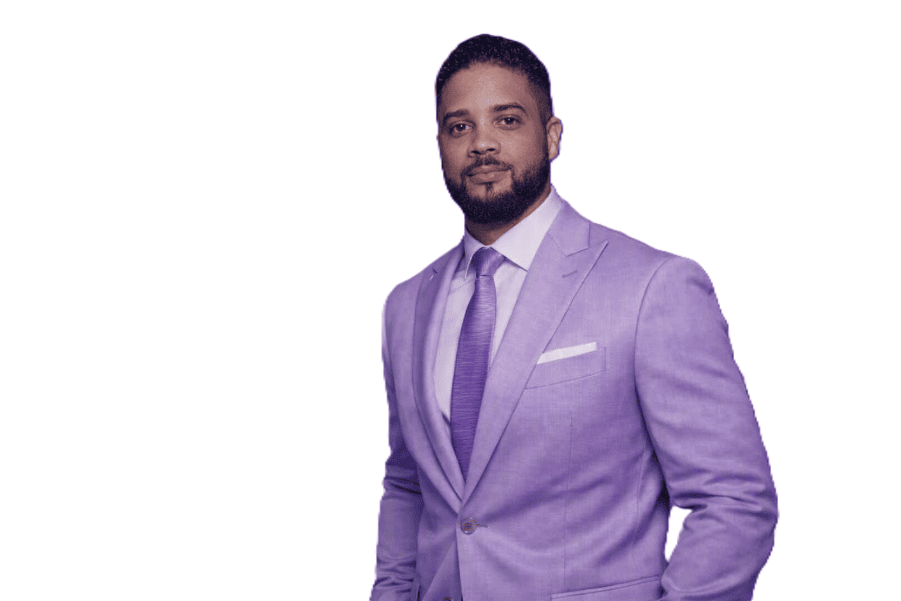
Dion Johnson, Founder and CEO, Indie Me
Dion Johnson focuses on consent-based AI, digital identity protection and content provenance. His work examines how individuals and creators can maintain control over their data, likeness and intellectual property.
Key insight:
“Trust is not a campaign message. It is built through clear consent, traceable data, auditable decisions and real accountability when something goes wrong.”
Johnson argues that responsible AI requires systems that show where content comes from, whether permission was granted and how misuse can be challenged.
Additional Expert Contributors
Edward Tian, GPTZero
Edward Tian works on AI transparency and detection technologies, focusing on how people understand and evaluate AI-generated information.

Key insight:
“People better accept the system because they know when to rely on it and when to apply human reasoning.”
Tian highlights the importance of explaining AI limitations and providing evidence behind automated decisions so users understand when AI should and should not be trusted.
Sean Campbell, CEO, Cascade Insights; Professor and Director of AI Integration, George Fox University
Sean Campbell studies technology adoption and workplace AI integration. His research focuses on the gap between what technology companies promise and what users experience.

Key insight:
“Public trust in AI has little to do with campaigns or statements and everything to do with whether the systems actually deliver once they’re in people’s hands.”
Campbell argues that adoption depends on real user experiences, practical results and helping workers understand how their roles will evolve alongside AI.
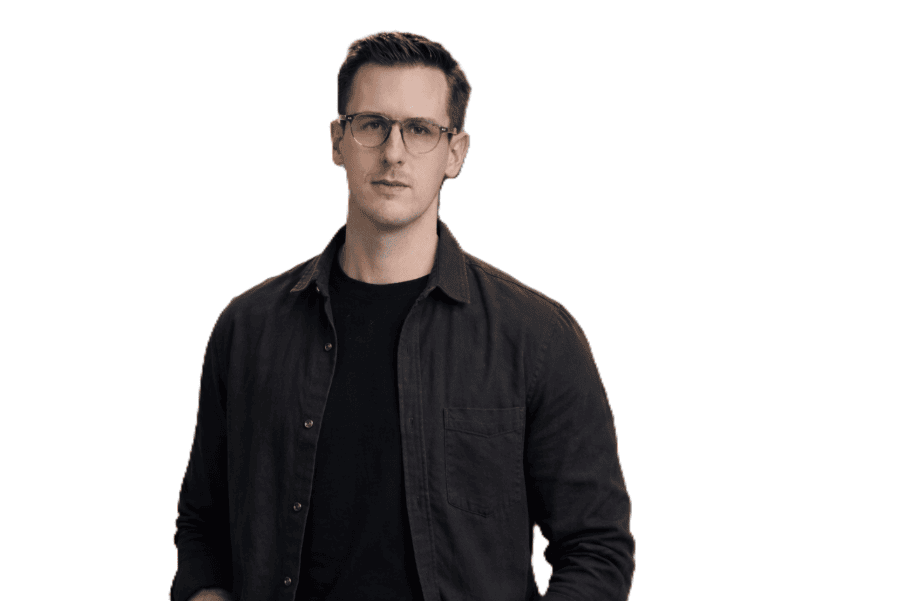
Niclas Braun, Founder and CEO, 4SI
Niclas Braun focuses on AI governance and verification infrastructure, particularly as AI systems become capable of making more consequential decisions.
Key insight:
“Public trust in AI will not be restored by better slogans. It will be earned when people can see where human responsibility sits, challenge consequential decisions and verify that systems stayed within defined authority.”
Braun argues that future AI systems require stronger verification mechanisms, clearer boundaries and visible human responsibility.
Ranjith Raghunath, CEO, CX Data Labs
Ranjith Raghunath focuses on customer experience technology and AI adoption. His work examines how organisations can build confidence in AI-powered systems.

Key insight:
“The fundamental issues people have with AI are not actually about the technology itself. People are worried about how this stuff is going to be used.”
Raghunath believes public confidence depends on transparency around control, protection and the real-world impact of AI deployment.
Matt Rouif, CEO and Co-Founder, Photoroom
Matt Rouif represents the perspective of an AI company developing customer-facing creative technology.

Key insight:
“Responsible AI needs to be measured by real-world reliability, not just intent.”
Rouif argues that AI companies must evaluate systems based on practical performance, accuracy and safeguards rather than relying only on stated goals.
Chaitanya Sidda, Founder and CEO, Amaraa
Chaitanya Sidda focuses on consent-first AI development, privacy and user control. His work examines how responsible principles can be built directly into AI products.

Key insight:
“Public trust will depend on how companies build transparency, control and accountability directly into AI products.”
Sidda argues that responsible AI should be designed into technology from the beginning rather than treated as a communication strategy after deployment.
Reflection
Together, these expert perspectives show that the future of AI trust will depend less on what companies say and more on what they can demonstrate.
From governance and legal accountability to workforce adaptation and consent, the message is consistent: responsible AI must be visible, measurable and accountable to the people who use and are affected by it.